
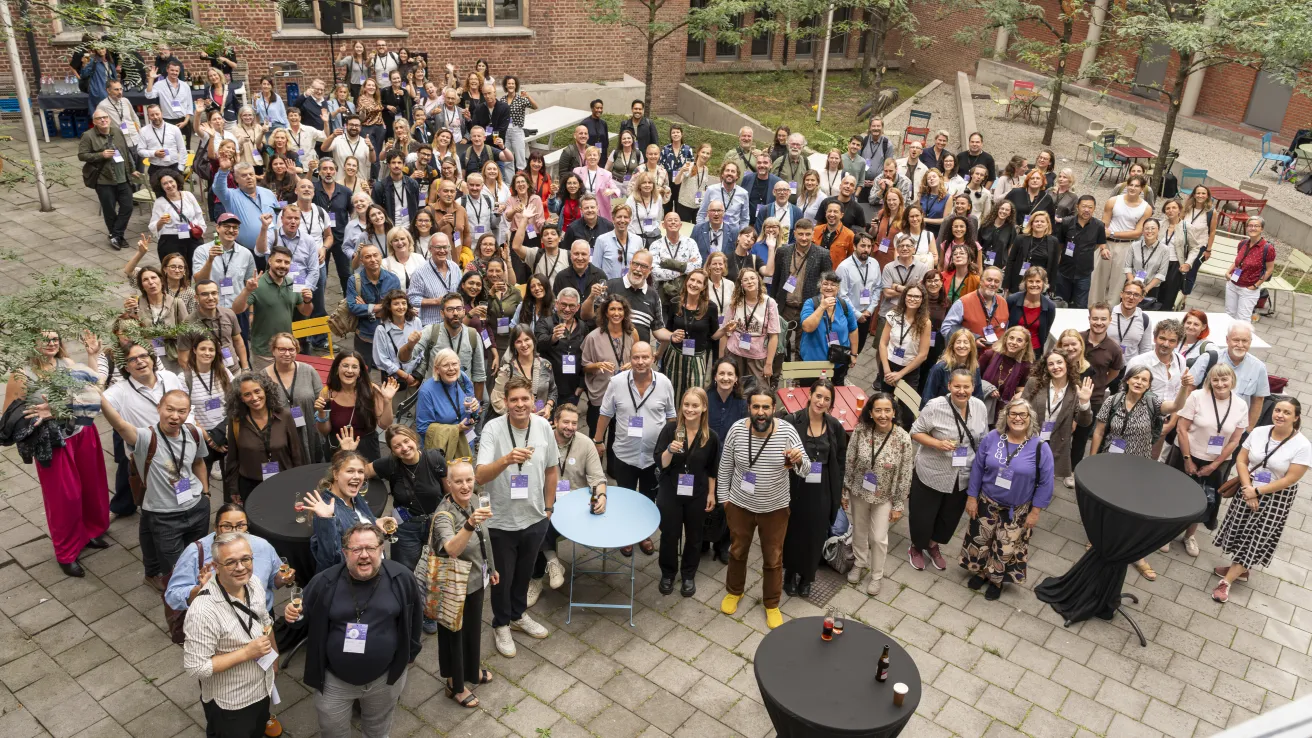
From 7 to 9 September, more than 300 participants from across culture, education, policy, research and business gathered in Brussels for Creative Skills Week 2026. Across three days at LUCA School of Arts and ICHEC Brussels Management School, the event asked a central question: how can creative skills help Europe respond to complex challenges and create lasting change?
For EIT Culture & Creativity, this question sits at the heart of our work. Education and skills development form crucial links to our wider activities, connecting education and training with business creation, innovation and social transformation to form an ecosystem that enables Europe’s Cultural and Creative Sectors and Industries (CCSI) to equip learners to work across disciplines and contribute to Europe’s green, digital and social transitions.
Creative Skills Week 2026 was designed as an opportunity to explore what happens when those connections are put into practice.
From creative skills to cross-sectoral confidence
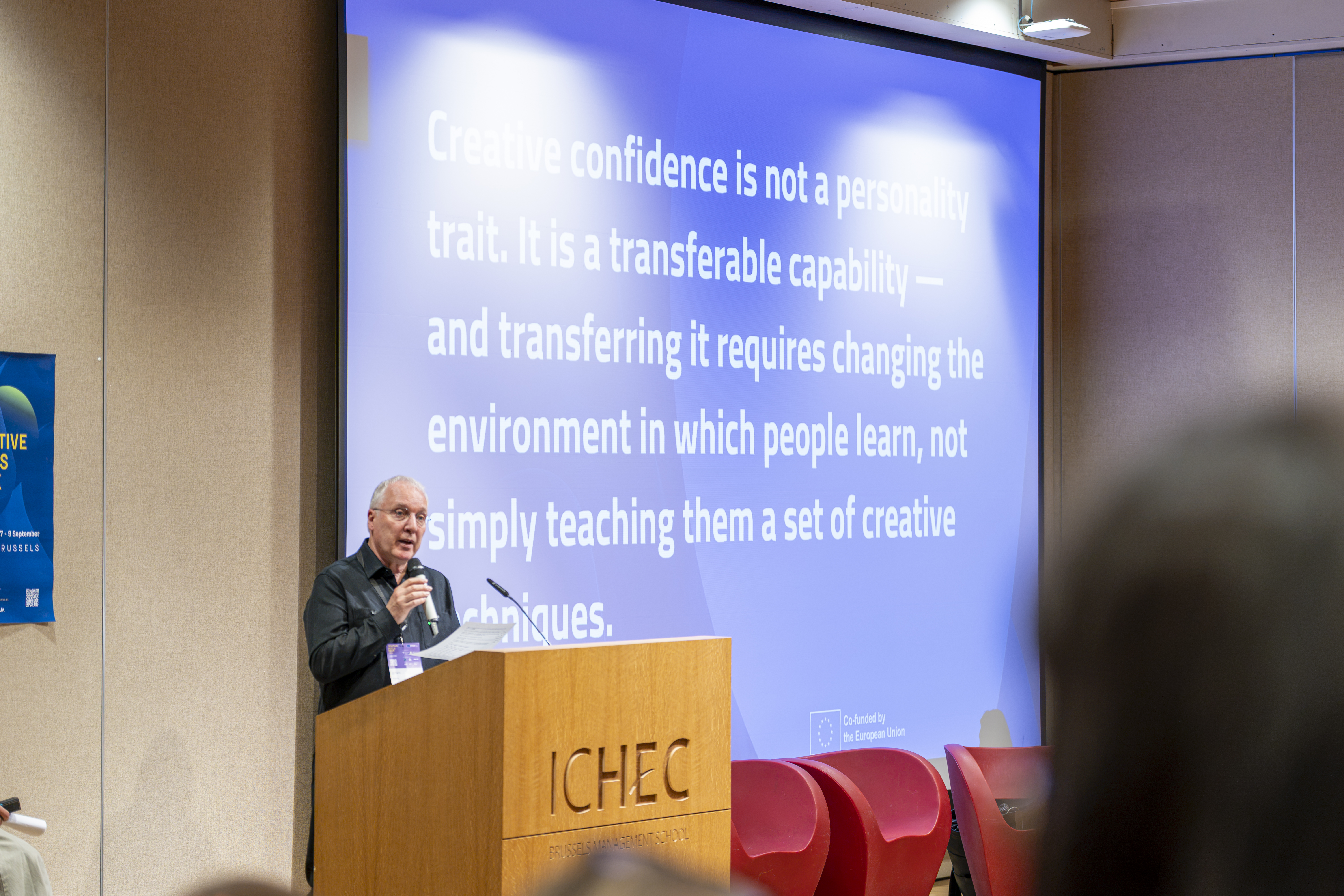
Co-organised by EIT Culture & Creativity alongside ELIA, CYANOTYPES, and the Creative Futures Academy, Creative Skills Week 2026 focused on the theme of creative confidence: the capacity to turn creative thinking into action, to bring together forms of expertise conventionally kept apart, thereby looking beyond the CCSI to examine how creative skills can contribute to innovation and problem-solving across wider sectors and society.
The potential for creative skills impacting sectors beyond CCSI was also emphasised as a critical priority for EU policymakers. Making important contributions to the event were key members of the European Commission, including Georg Häusler, Director for Culture, Creativity and Sport (DG EAC); Daniela Santopolo, Policy Officer for Skills at the European Commission (DG EMPL); and Barbara Stacher, Senior Expert at the Unit for Cultural Policy at the European Commission (DG EAC).
To make manifest this question, the event moved at the midway point from LUCA School of Arts to ICHEC Brussels Management School, raising a career decision often faced by young professionals in the sector: whether to develop their creative practice as a teacher or researcher within a higher education arts environment, as a freelancer, and/or develop business competences to extend their practice. The dual venue approach also encouraged participants to consider not only where creative skills are developed, but also how creative skills can travel across sectors.
EIT Culture & Creativity curated contributions from beneficiaries of its Business Creation, Innovation and Social Transformation programmes, including ArtCentrica, The Fabricant and RISE, demonstrating how the EIT ecosystem can mobilise around shared challenges.
Exploring AI, creativity and new forms of collaboration
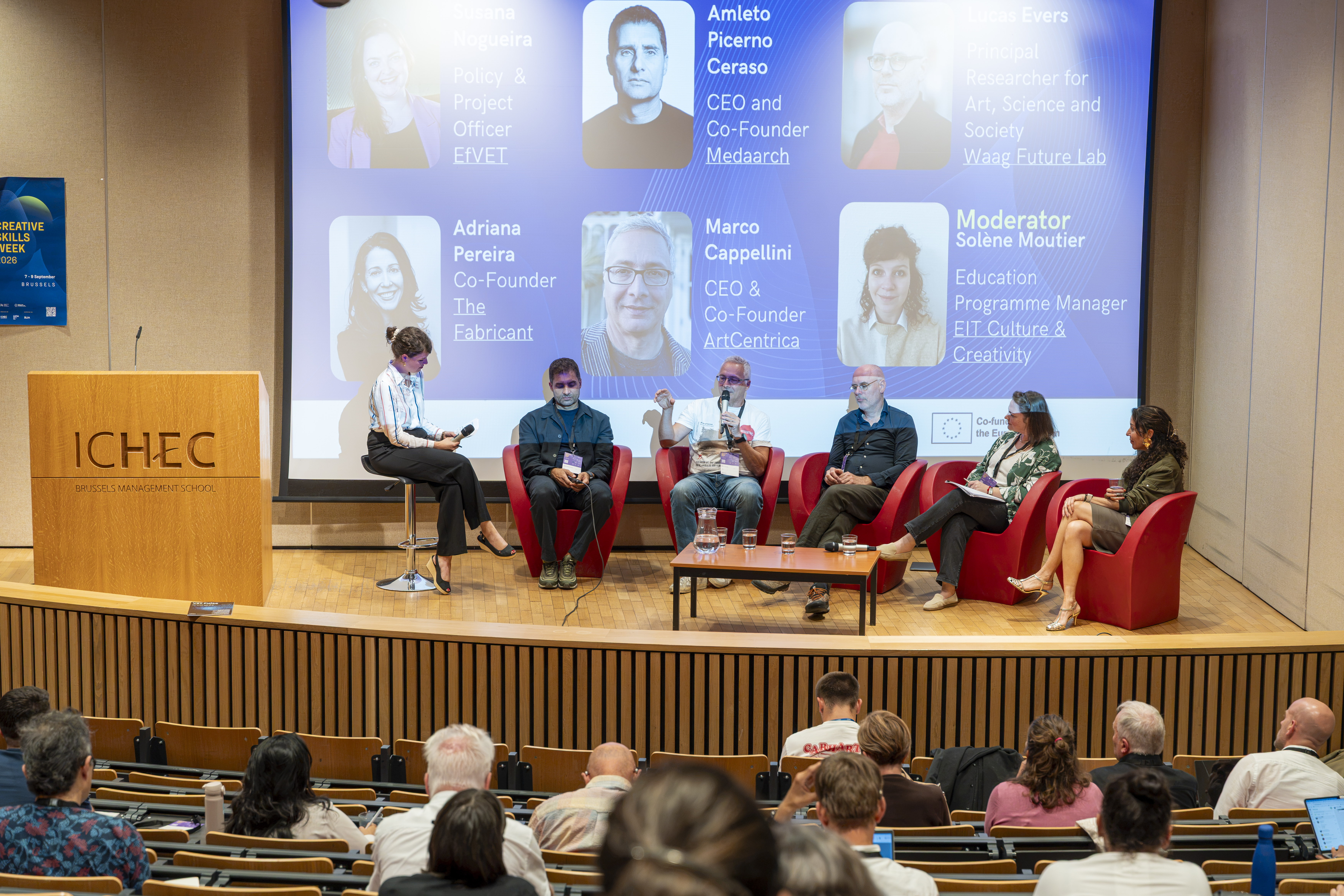
EIT Culture & Creativity hosted the AI & Creativity panel, bringing together perspectives from across the CCSI to examine the opportunities and challenges created by AI’s growing presence in creative practices. Moderated by Education Programme Manager Solène Moutier, the panel brought together five different stakeholder perspectives, including several participants in the EU-funded Erasmus+ RenAIssance project, to explore how the CCSI can actively shape a human-centred AI transition – and what creative professionals, educators and organisations need in order to navigate it.
This emphasis on navigating change was echoed throughout the wider programme, which explored skills ecosystems, micro credentials, sustainability, entrepreneurship and cross-sector collaboration. Together, these discussions reinforced a central message: developing skills is only one part of the equation. Those skills need pathways into networks of collaboration.
What Counts as Value?
The final day addressed a question that permeated the entire event: how do you measure the true impact of cultural and creative work, and are current methods sufficient for this task?
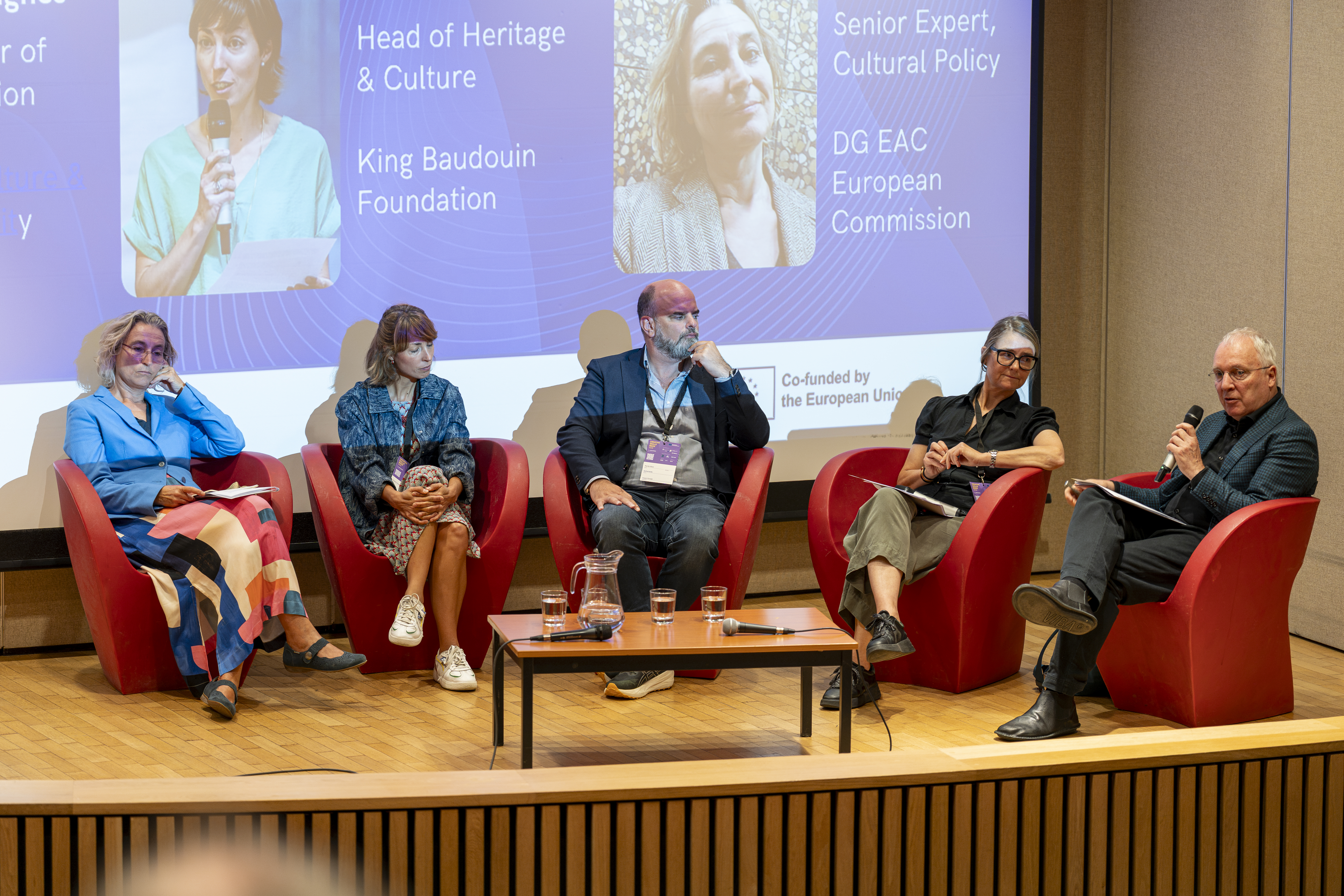
What Counts as Value? From Data Gathering to Impact & Public Value, moderated by Rolf Hughes, Director of Education at EIT Culture & Creativity, brought together perspectives from DG EAC, Video Games Europe, Impact Europe and the King Baudouin Foundation. Each speaker represented a different stage of the CCSI value chain and contributed to an urgent discussion on how evidence, data and evaluation frameworks might better capture the contribution of culture and creativity to social cohesion, democratic participation, wellbeing and resilience.
“Do we measure value, or do our methods of measurement determine what becomes visible as value? When we decide in advance what we are willing to count, do we inadvertently render invisible the most transformative work being done at the grassroots?” - Rolf Hughes, Director of Education, EIT Culture & Creativity
The question resonated beyond the panel itself. Audience discussion turned to who decides what is visible, and for whom, with Dr Anubha Sarkar asking: “How do we capture the invisible cultural values and make them visible? […] Who decides this visibility? And who is it for? Because we also have cultures that are completely invisible or excluded as well.”
The discussion also highlighted the need to consider forms of value that may emerge through changes in relationships, confidence, agency or collective capacity rather than outcomes that can be easily quantified. As Melanie Coisne of the King Baudouin Foundation reflected, “One of the possible paths for the future is continuing exchanges between the practitioners of socially engaged arts and funders and investors to keep a dialogue [about value] going.”
From creative confidence to lasting impact
Creative Skills Week 2026 closed by asking what happens next: how can creative skills and competences move from individual initiatives towards lasting change in organisations, ecosystems and public policy?
For EIT Culture & Creativity, the answer lies partly in continuing to build the connections that make such change possible: between education, research and business; creativity and other sectors; skills and entrepreneurship; innovation and social transformation.
But it also requires asking harder questions about what we choose to recognise, what we choose to fund, and which contributions become visible. Creative confidence is not only about having the capacity to imagine alternatives. It is also about creating the collective capacity to ensure those alternatives can be acknowledged, supported and translated into meaningful impact.
Explore the work we do at EIT Culture & Creativity on skills and education.