
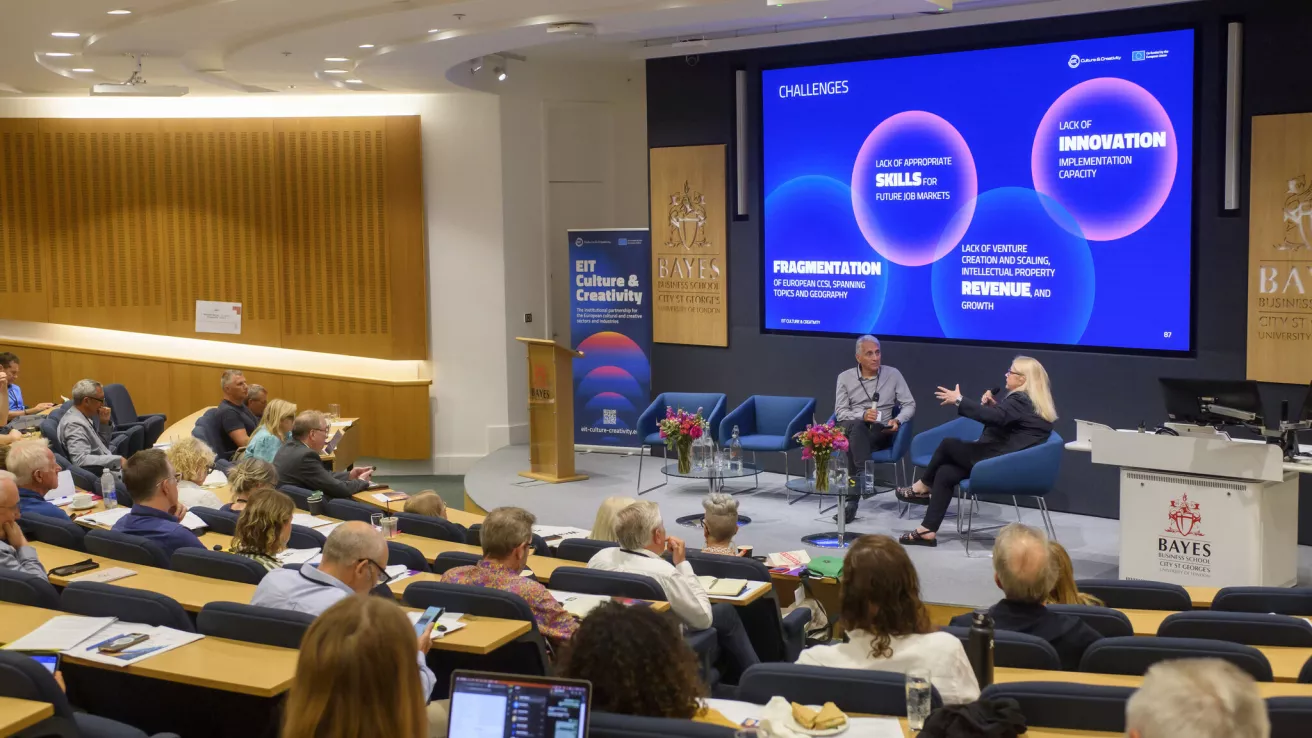
Investors, policymakers and regulators with vision can help creative companies thrive in a rapidly-changing sector. So concluded around 150 sector leaders, entrepreneurs, investors and finance experts at the second Creative Industries Finance Forum, hosted by Bayes Business School in London and sponsored by EIT Culture & Creativity.
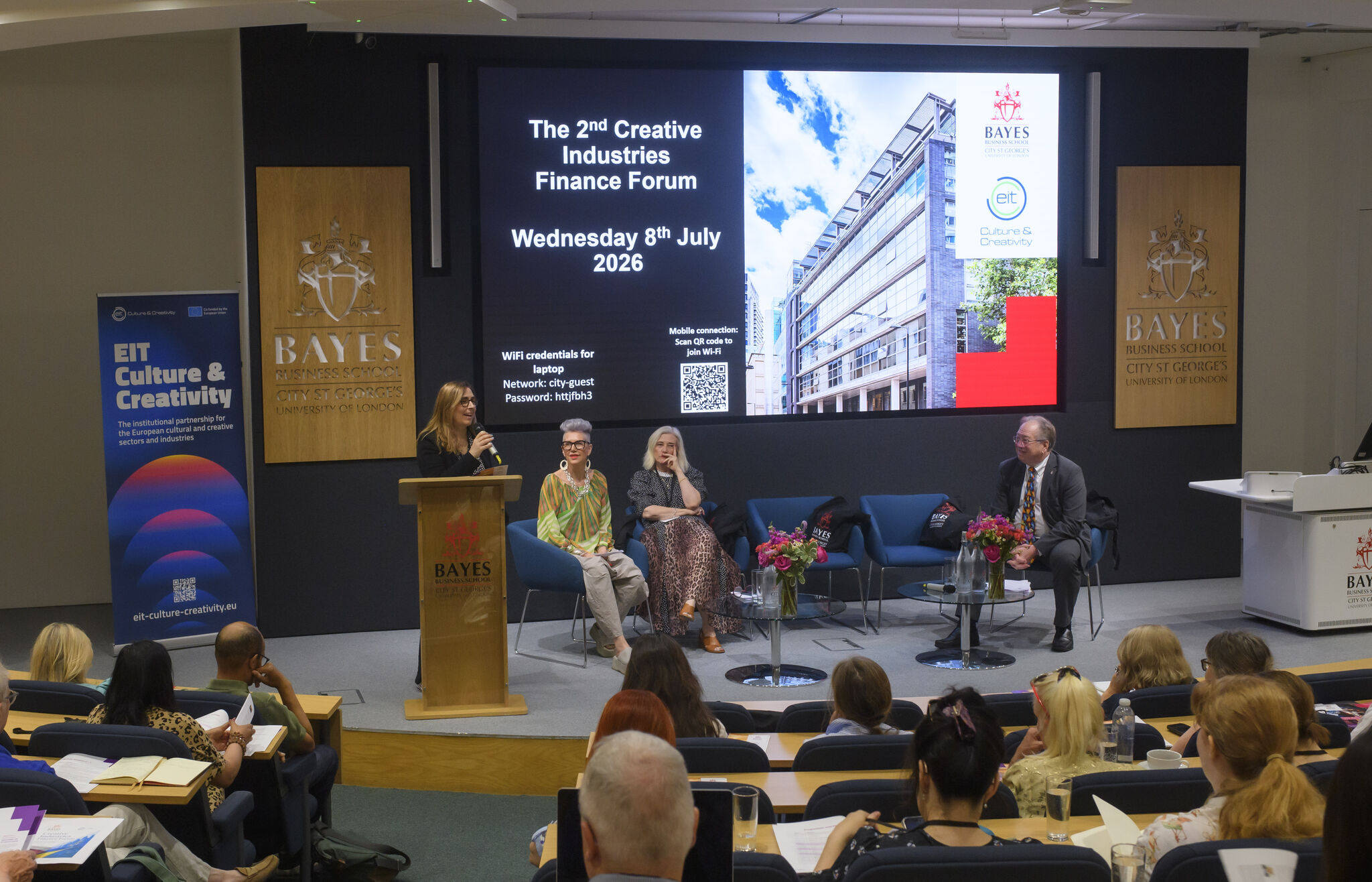
Welcoming guests, Bayes' Deputy Dean Professor Barbara Casu said: "The creative industries are an increasingly important driver of economic growth, innovation and cultural influence. Ensuring that they have access to the right financial expertise, investment and international networks is therefore a challenge that deserves the attention of both industry and academia."
The discussions sought to answer the question: “How could the creative economy have a dedicated investment asset class?”
Putting capital and creativity in the same room
As sponsor of the forum, EIT Culture & Creativity contributed to several of the day's key discussions.
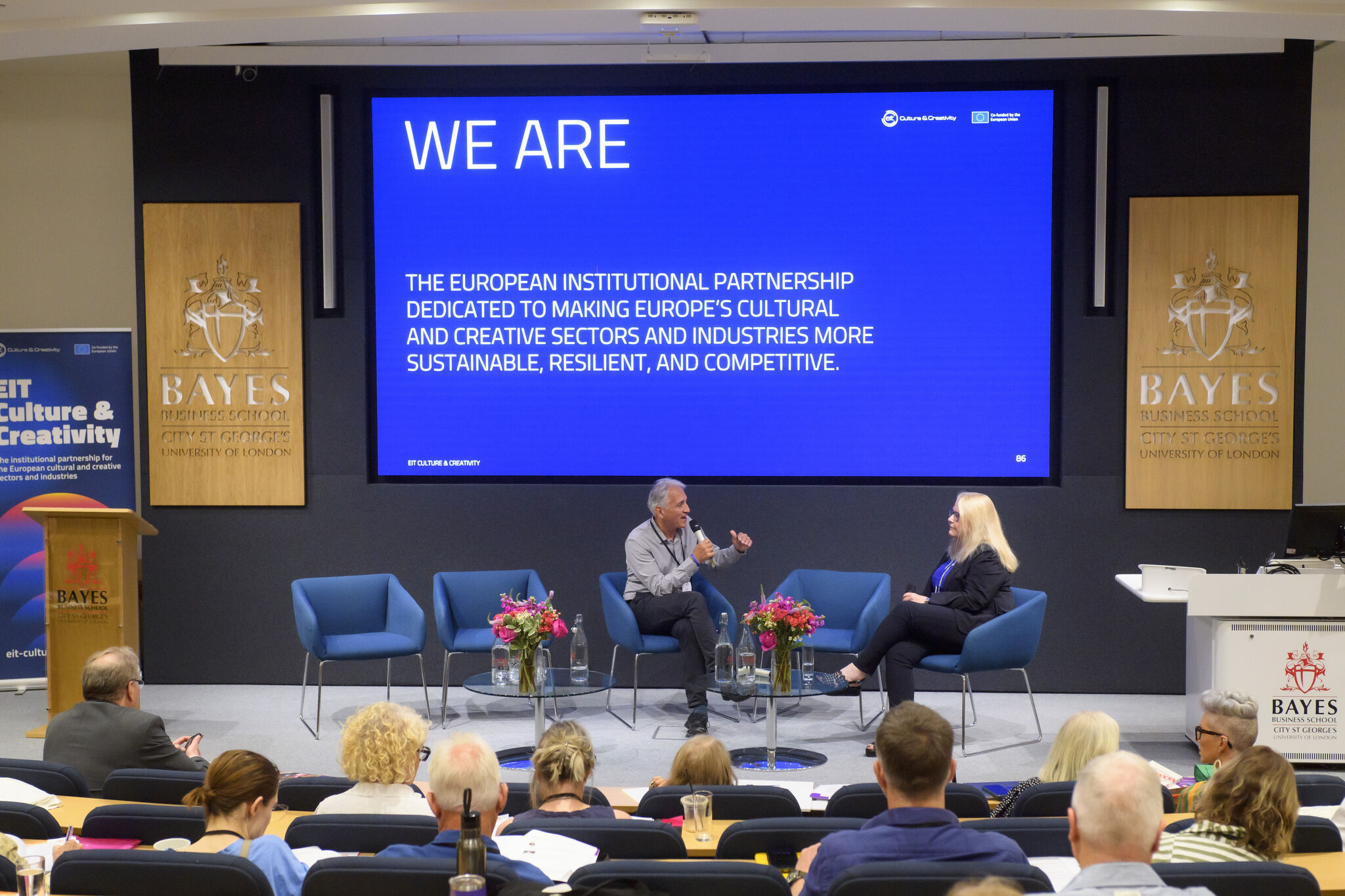
CEO Anette Schaefer joined a fireside conversation on the strategic importance of Europe's creative industries: "Much of the value of firms in the creative sector lies in intellectual property, engaged communities, digital platforms and new business models. Yet these assets often remain difficult to translate into investment opportunities using traditional financial approaches. Creating a stronger investment ecosystem requires structural access to capital, new ways of looking at financial instruments and developing a shared understanding between creative entrepreneurs, investors, policymakers and industry."
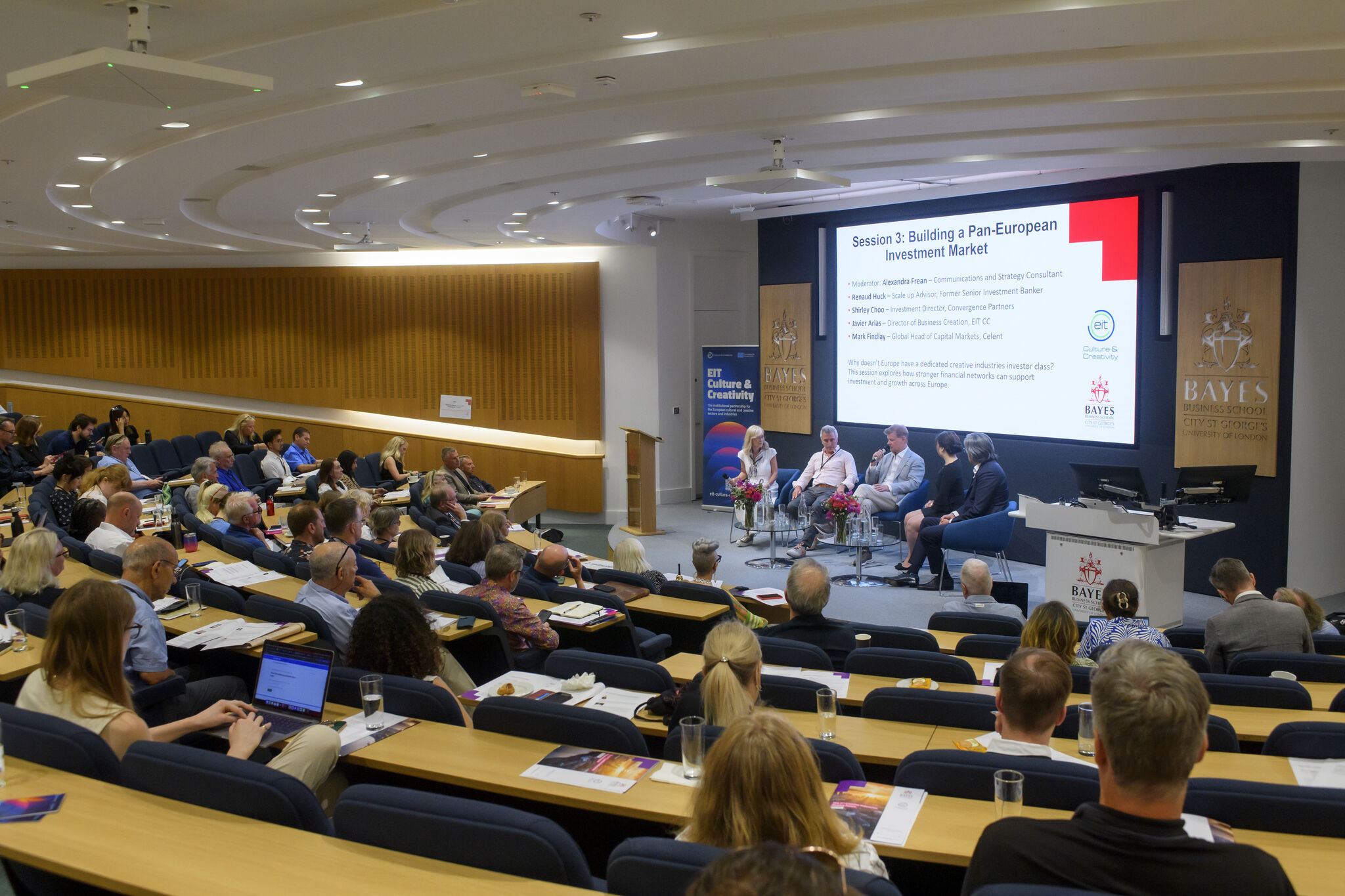
Javier Arias, Director of Business Creation at EIT Culture & Creativity, joined investors, investment bankers and capital markets experts on the panel "Building a Pan-European Investment Market," addressing why Europe still lacks a dedicated creative industries investor class and what would be needed to build one.
What emerged across the day
Katherine Parsons, who leads the Executive Master's in Leadership for the Creative Industries at Bayes, said participants responded with enthusiasm to the challenge: "There was clear investor enthusiasm for the sector. While there are undoubted challenges - many around regulation and a paucity of data - we identified and highlighted practical actions to address or remove those barriers."
Several themes ran through the panels: creative IP as an economic asset in its own right, increasingly central to how investors assess a business. Public funding's role in de-risking private capital. Streaming platforms and social media reshaping the creative value chain, raising questions about discoverability, audience ownership and where value lands. And growing investor attention to fan communities and recurring audience engagement.
Discussions on platforms and market dynamics also drew on the industry side, including ITV's Martin Goswami on strategic partnerships and distribution for ITVX and BritBox, while Tom Adeyoola, Executive Chair of Innovate UK, noted that broadcasters' long-tail content revenues alone won't cover the reinvestment the sector needs.
Amanda Goodall, Professor of Leadership at Bayes, closed with the scale of what's at stake: "The creative industries contribute 5-6% to both the UK and EU economies. We achieved a lot today by drawing together shared insights from public and private sectors, academia and other expertise from the creative industries."
Why this matters for EIT Culture & Creativity
The forum reinforced what sits at the core of our mission: Europe has the creative talent and cultural assets, but needs stronger investment networks and better mechanisms to move capital across borders.
Bridging that gap between creators and investors is exactly the work EIT Culture & Creativity exists to do.