
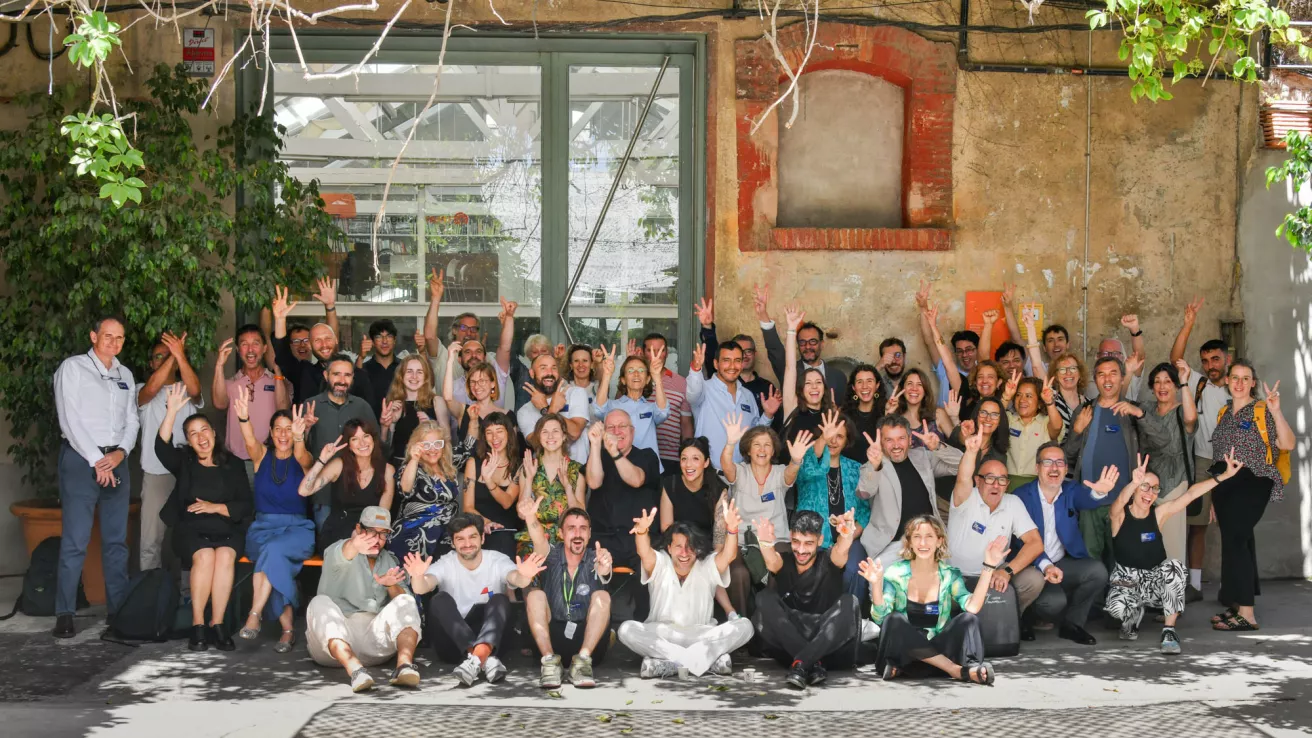
Creatives, innovators, investors and policymakers from Europe's cultural and creative sectors and industries (CCSI) gathered in Barcelona to strengthen relationships across the regional ecosystem and explore new opportunities.
On 18 June, EIT Culture & Creativity's Regional Hub South-West hosted its Open Day at the Barcelona XRLab - Palo Alto, bringing together participants from across the region’s cultural and creative sectors for an inspiring day of exchange.
The choice of location was no accident. Barcelona has been designated UNESCO World Architecture Capital for 2026, lending added weight to a day of panels, exhibitions and matchmaking co-designed with partners and beneficiaries from across the South-West region. It also coincided with Sónar Week, the city’s week-long festival celebrating music, innovation, and digital culture.
"We are in Barcelona XRLab, a real ecosystem where we can deploy our mission and activities. We want to engage people and help them in a sustainable way, to be resilient and competitive in a very hard and complex market," said Fabio Palma, Director of the South-West Regional Hub.
Steering towards a bright future for Europe’s cultural and creative industries
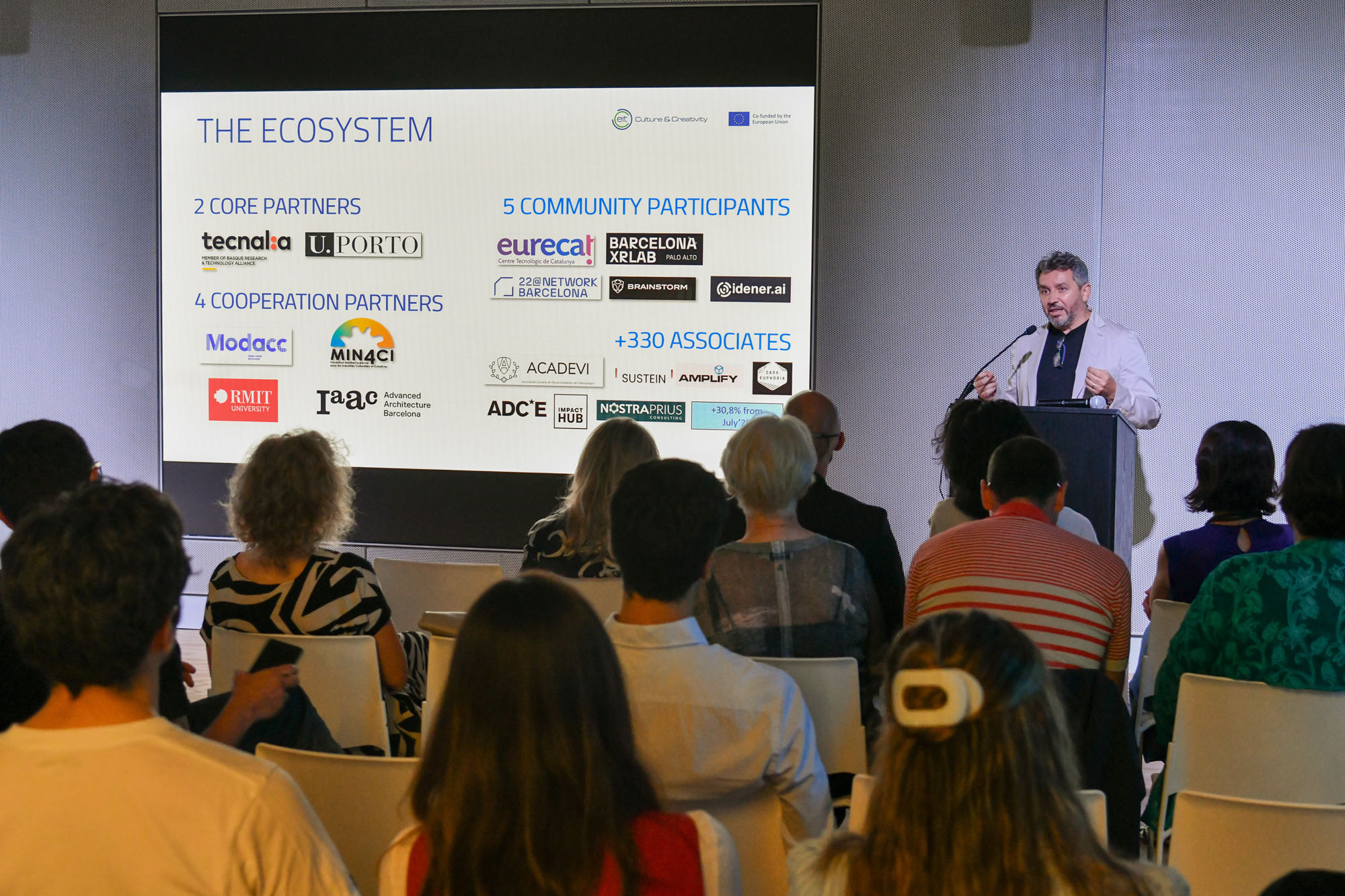
The Open Day was led by a steering committee comprising EIT Culture & Creativity partners IAAC – Institute for Advanced Architecture of Catalonia, MIN4CI & RMIT Europe. The 118 participants were united around a shared vision: strengthening the connections will enable culture and creativity to thrive as a genuine economic and social force across Europe.
"The EU Commission relies on EIT Culture & Creativity to interconnect the ecosystem, bring people together and enable innovation on the ground," said Manuel Szapiro, Head of the European Commission Representation in Barcelona. "Culture & Creativity are strategic for Europe – economically, socially and democratically – with a vibrant startup landscape, especially in Barcelona, Portugal and Italy."
The event was a living example of Europe’s creative potential with participants from academia, business (startups & industry), cultural institutions, research centres, investors & policymakers.
From architecture to music to AI
The Open Day was built on three pillars:
- Sustainable architecture and innovation
- EU cultural sovereignty & digital services
- AI opportunities & challenges for the music sector
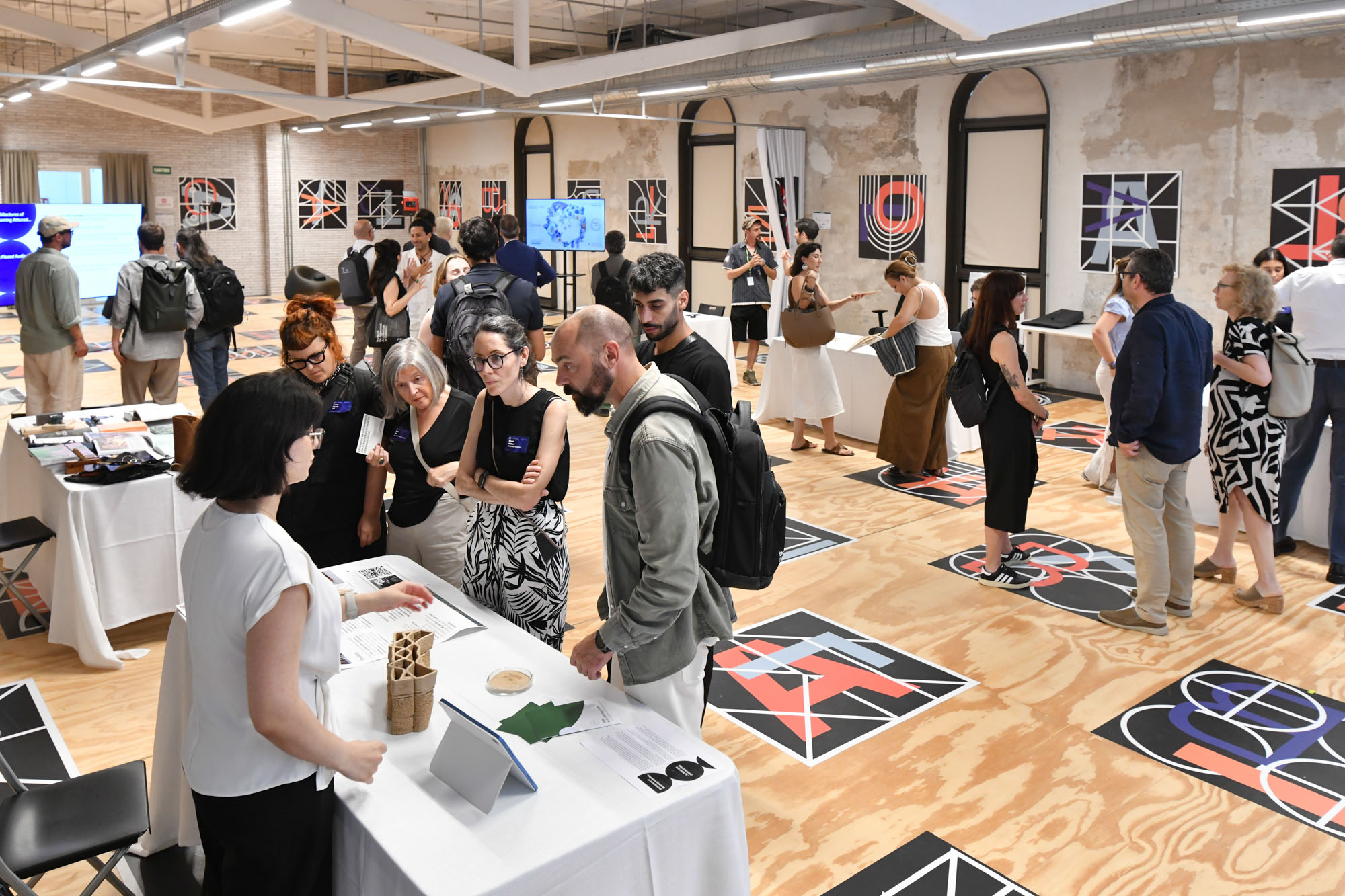
One of the first sessions and the “Architectures of Becoming” exhibition lead by MIN4C explored innovations in the European architecture sector. Barcelona recently hosted the World Congress of Architects (UIA 2026), while EIT Culture & Creativity has recently become an implementing partner for the New European Bauhaus (NEB) Academy – a European initiative to make built environments more sustainable, attractive and affordable for all.
The session also featured research and educational centre projects such as RMIT EU and IaaC: as well as entrepreneurs from the EIT Culture & Creativity startup 100-to-wath community who are developing sustainable building materials and practices: Sustein Material, Nera Ecoconstruction, CODA and Escena 4.0.
Discussions then turned to EU cultural sovereignty and the practicalities of building a resilient digital ecosystem with the participation from the Barcelona AI European Factory, and another startup from our portfolio, Leren Leren
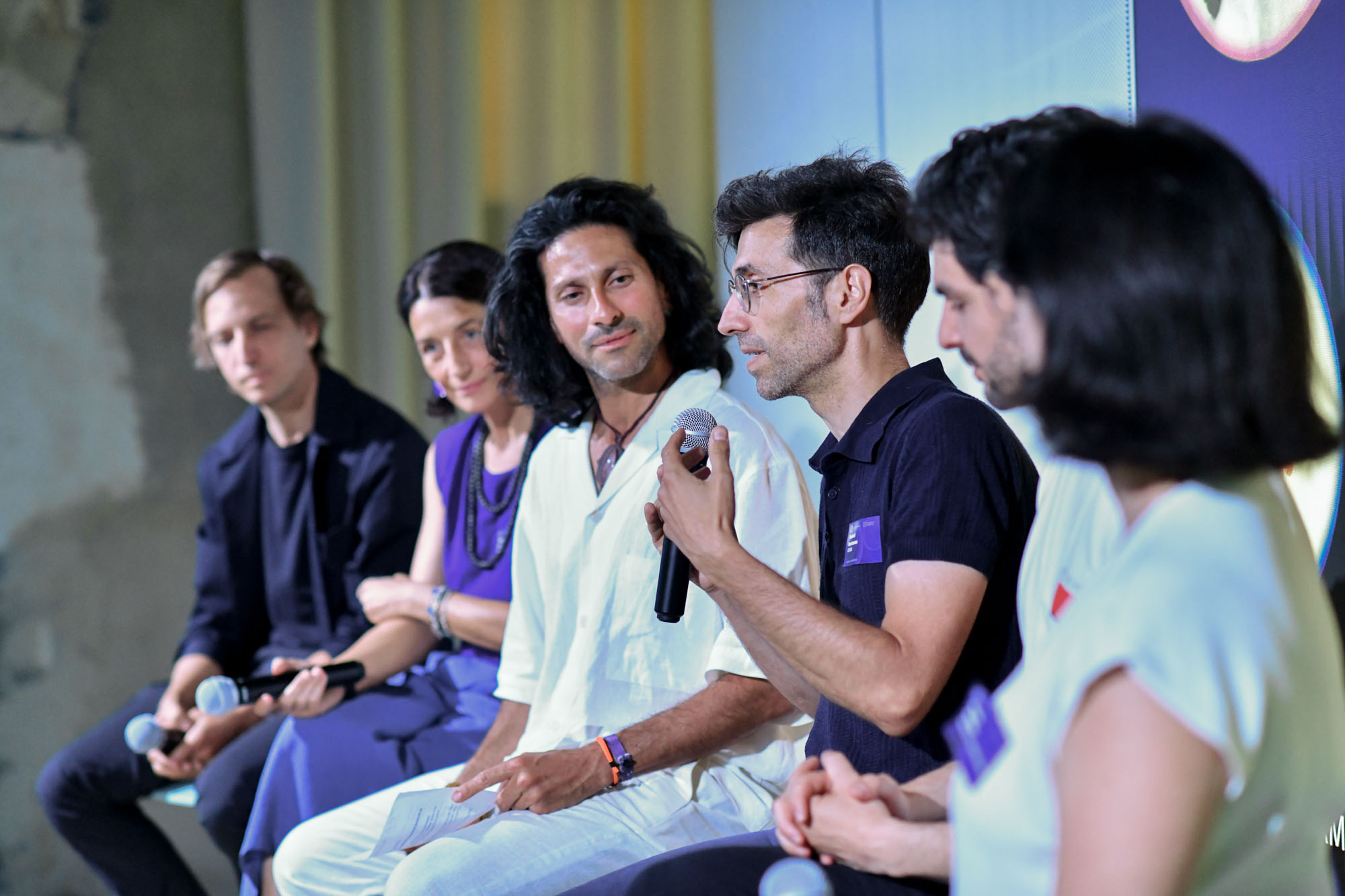
Barcelona Music Lab led an interesting panel with UAB-Cruïlla demonstrating how music festivals can be spaces for pilots, and Flood Audio exploring the intersection of music, culture and AI. Christian Len Rosal, CEO of Floood audio, reflected on the support he had received in developing MUSEEC, the first global e-course and certification in music curation.
"EIT Culture & Creativity gives you a projection, a future, the real impact you want," he said. "The best part of our collaboration is to see that there is someone on the other side. It's not just funds but also go-to-market opportunities, as when you do something really new, it is really risky."
The panel was followed by an exhibition and music specially created for the event by Flood Audio.
Funding opportunities
In the second half of the day, there was a dedicated session that explored Horizon Europe opportunities, presented by IaaC and FECYT with the support of Spain's Ministry of Science*, Innovation and Universities, which opens additional funding routes for the region. Adeline Marcos, Spain’s Representative for Cluster 2 of Horizon Europe, encouraged participation in Horizon Europe calls that give access to significant funds for Culture and Creative Sectors to research and boost projects' competitiveness.
Successful examples of EU consortiums to benefit from Horizon Europe support include the Infinity Project and RED-Pro, Regenerative Ecologies of Design & Production for European Heritage (RED&Pro) led by IaaC. EIT Culture & Creativity participated in both of them.
To wrap up, delegates heard about EIT Culture & Creativity's 2026 programmes and calls across Education, Business Creation, Innovation, and Transformation, giving participants a clear picture of what's coming and how to get involved.
*The Horizon Europe panel was made possible through the support of the Ministerio de Ciencia, Innovación y Universidades del Gobierno de España and AEI as part of the GPE2024-001526 project “Implantación Estrategia HEU IAAC 2025–26”, funded by MICIU/AEI/10.13039/ 501100011033.
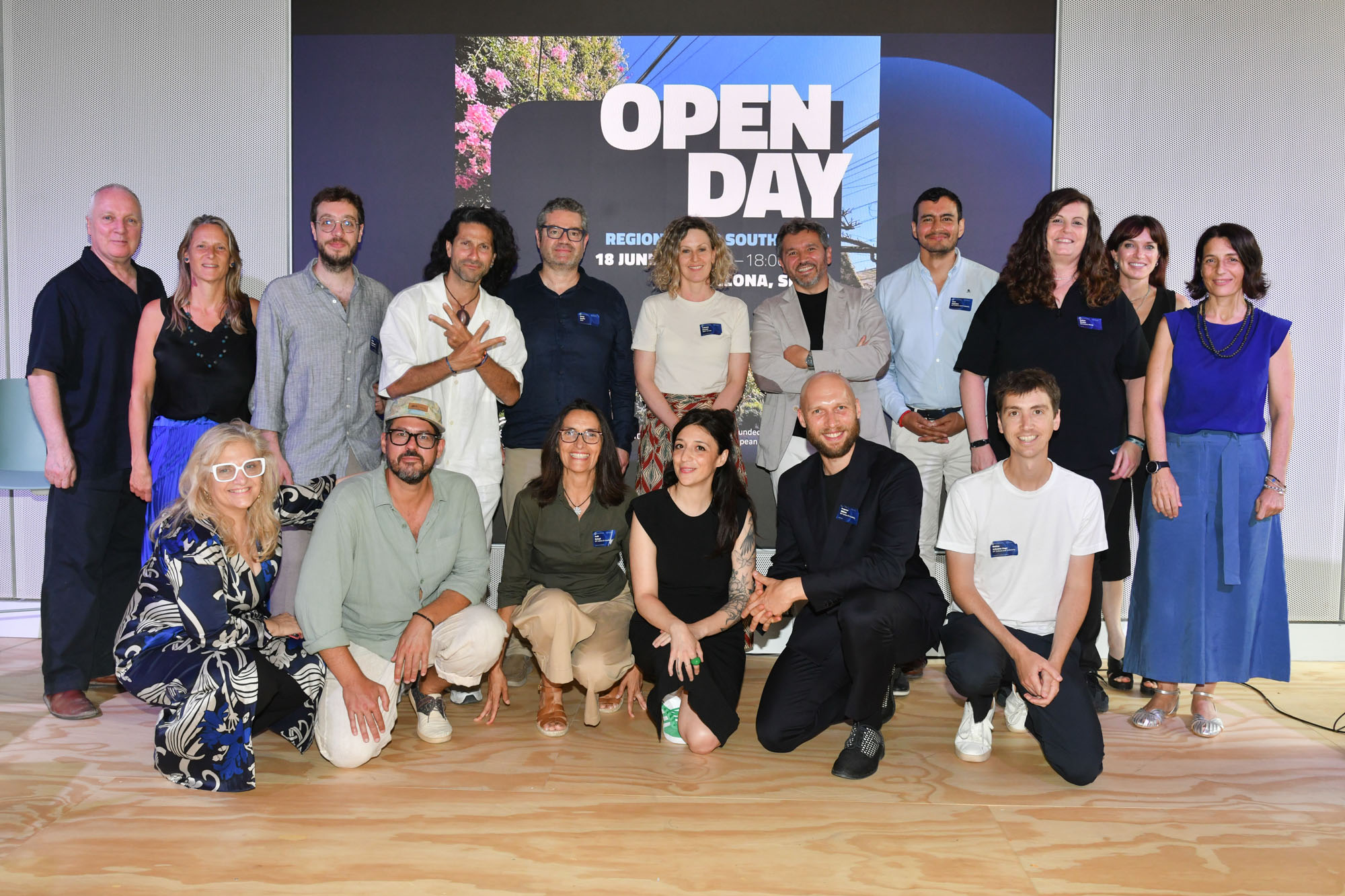
Co-designing the event, co-designing the future
Throughout the day, participants engaged in structured matchmaking sessions, one-to-one meetings, and spontaneous networking. These interactions sparked new project ideas, consortium discussions and cross-sector collaborations – exactly the kind of connections the South-West Hub aims to catalyse.´
The event's design was itself part of this collaborative ethos, as explained by Eliesh SD, a futurologist architect who was part of the steering committee representing MIN4C. "The South-West Regional Hub provokes empowerment by bringing a group of people to the ecosystem to prepare this event, to create the exhibition, the panels together, in a bottom-up approach. That generates a better connection between partners – and the process by itself is an empowering process."
This co‑creation model is now a blueprint for how EIT Culture & Creativity will continue building regional innovation dynamics. For Europe's creative and cultural sector, the door to collaboration – and funding – is very much open.