
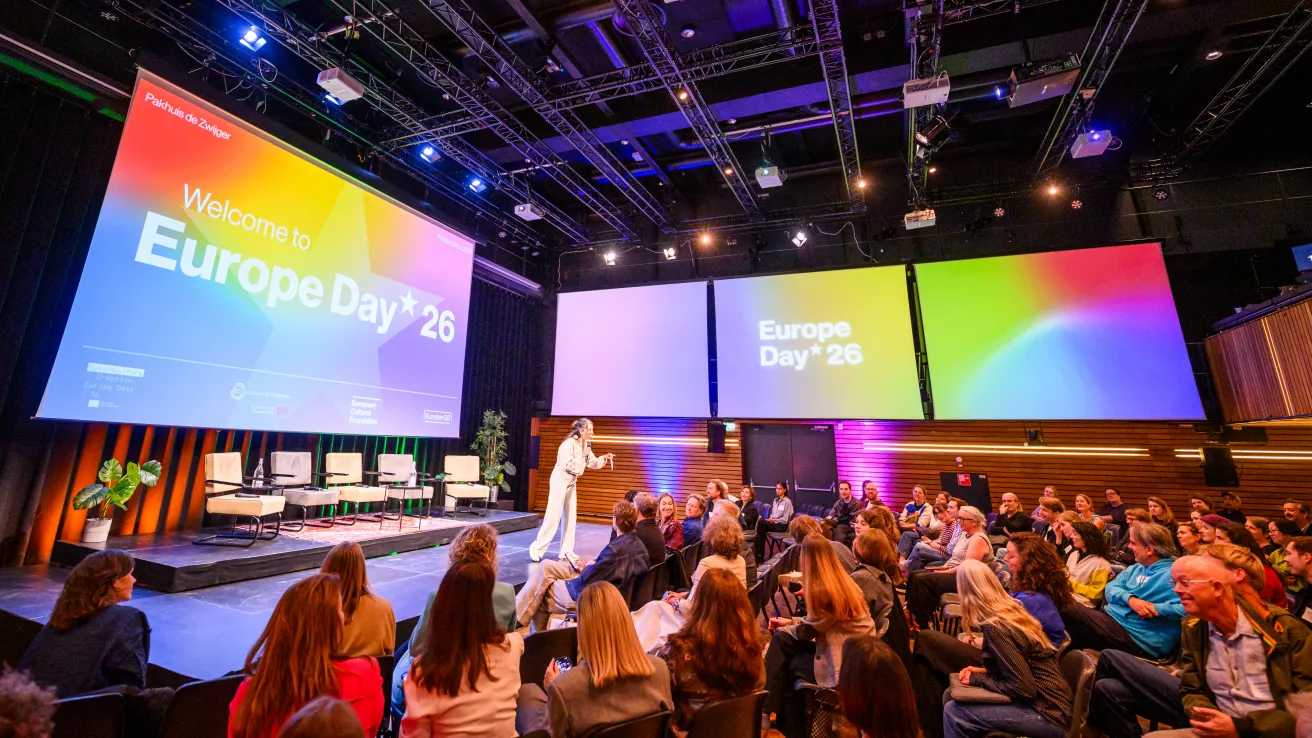
On 8 May 2026, Amsterdam became a meeting point for the North-West European cultural and creative ecosystem, as EIT Culture & Creativity’s Regional Hub North-West hosted its Open Day. The event was part of Europe Day at Pakhuis de Zwijger co-organised with the European Cultural Foundation, DutchCulture | Creative Europe Desk NL and Kunsten ’92.
Bringing together partners, beneficiaries, policymakers, and creative practitioners, the Open Day highlighted how culture and creativity contribute to shaping resilient, connected, and future‑ready societies.
Strengthening connections across the North-West region
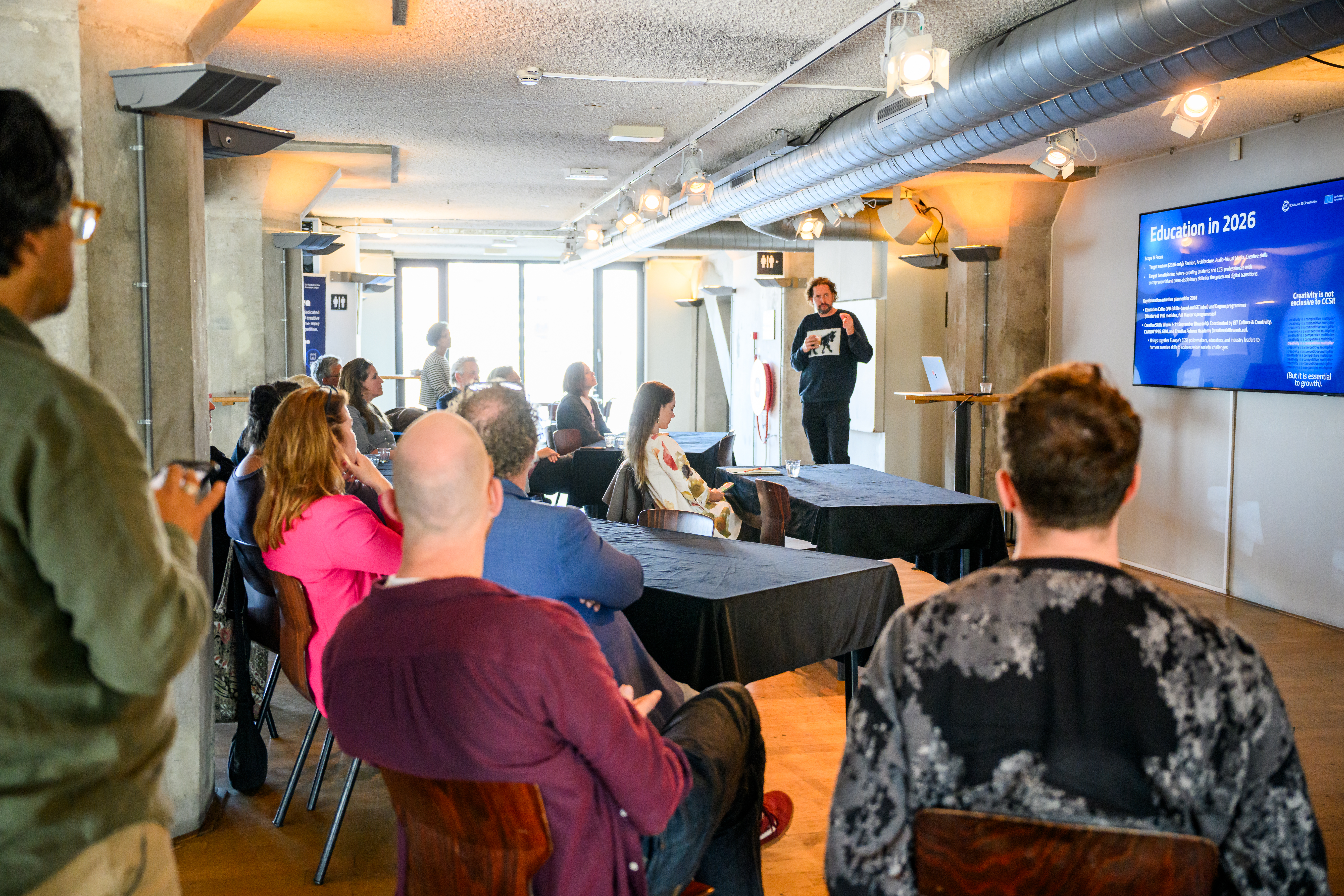
The day began with a dedicated Regional Hub North-West partner meeting, setting up the tone for open exchange and collaboration.
Partners from across the region shared updates, reflecting on ongoing initiatives, and discussing opportunities for future cooperation. The session highlighted the importance of building strong regional foundations to enable innovation at a European scale.
It was inspiring to see partners and beneficiaries based in the North-West region engage in insightful discussions. These exchanges create space for new connections to emerge, linking organisations, projects, and ideas that are shaping the cultural and creative sectors across borders.
From regional exchange to European dialogue
Following the partner session, the programme opened to the wider public as part of Europe Day, exploring five interconnected themes shaping Europe’s creative future:
- Democratic media and journalism
- European sentiment and cultural cohesion
- Innovation and responsible technology
- Fashion, textiles, and circularity
- Scaling Europe’s Creative and Cultural Industries
Across sessions, a shared idea emerged: culture is not only a sector, but an enabling force supporting participation, strengthening trust, and connecting people across Europe. Rather than functioning in isolation, culture and creativity can help connect policy priorities, civic participation, and innovation ecosystems.
Circular fashion requires more innovation and collaboration
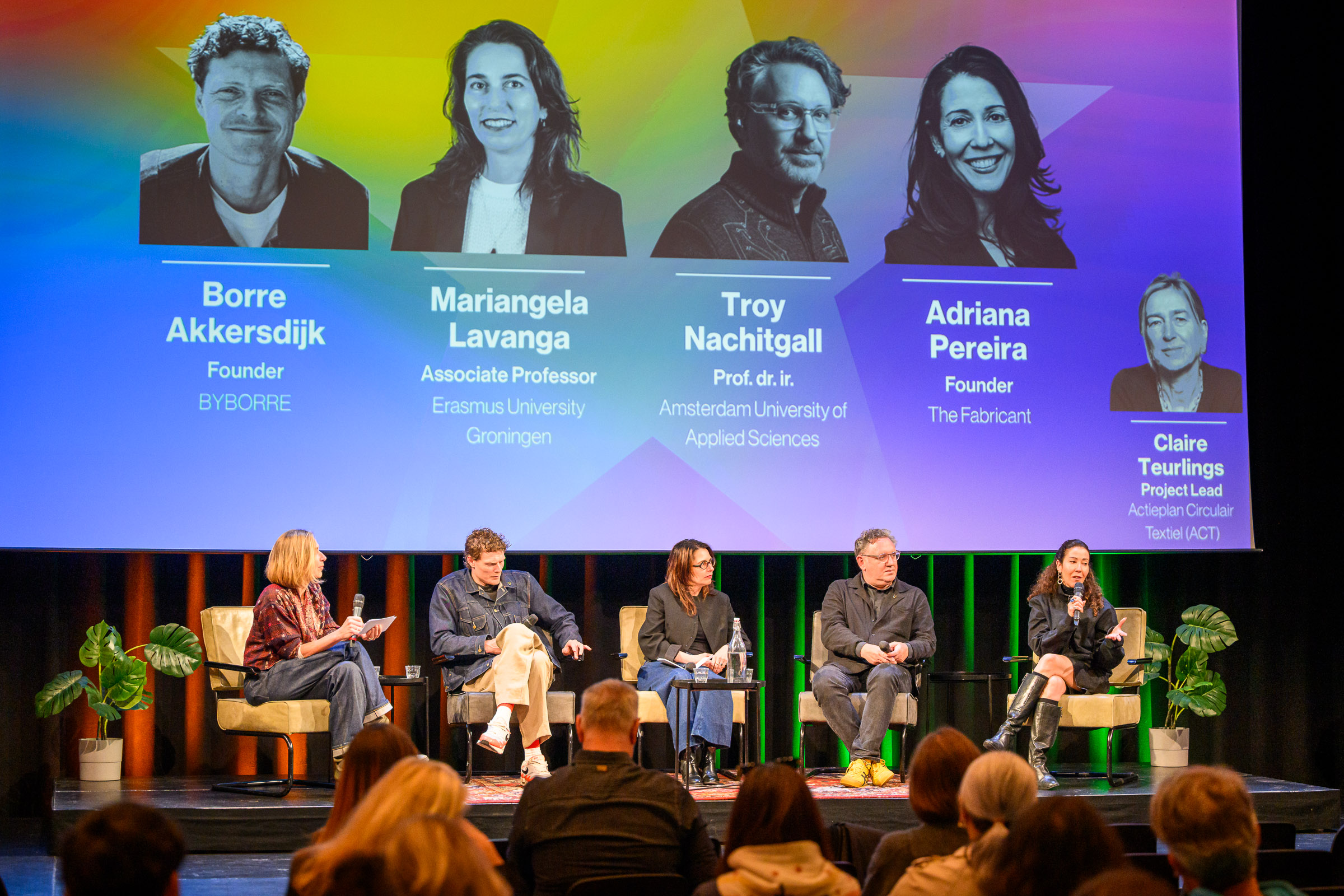
A session on Traceability and the Future of European Fashion explored how transparency, digital tools, and new production models are reshaping the fashion and textile ecosystem. The keynote was delivered by Borre Akkersdijk, founder of startup BYBORRE, which is reshaping how sustainable textiles are designed, produced and supplied.
Panelists brought diverse perspectives, representing different parts of CCSI: Digital fashion house The Fabricant, an EIT Culture & Creativity Innovation Grant beneficiary, alongside regional partners Amsterdam Fashion Institute (AMFI) and Erasmus University Rotterdam.
Speakers highlighted the growing importance of circularity, digital innovation, and traceability in building a more responsible industry. Together, they explored how emerging technologies, research, and design practices intersect, sharing insights on how collaboration between startups, academia, and regional ecosystems can help accelerate the transition towards a transparent and circular European fashion sector.
The discussion also highlighted a broader shift taking place across Europe’s fashion and textile industries: sustainability increasingly depends not only on materials and production methods, but also on new forms of cross-sector collaboration.
Digital sovereignty, Audiovisual media as a force for democratic resilience and cultural cohesion
Another key session explored Digital Sovereignty in Europe’s Media Landscape. It opened with a keynote by Vivian Opsteegh, CEO of Media Campus NL, based on the recently released NL Mediacluster 2040 Positioning Paper. Drawing on the report, she argued that media must be understood not as content, but as critical infrastructure that is being reshaped by AI and synthetic media, and increasingly defined by trust and local legitimacy.
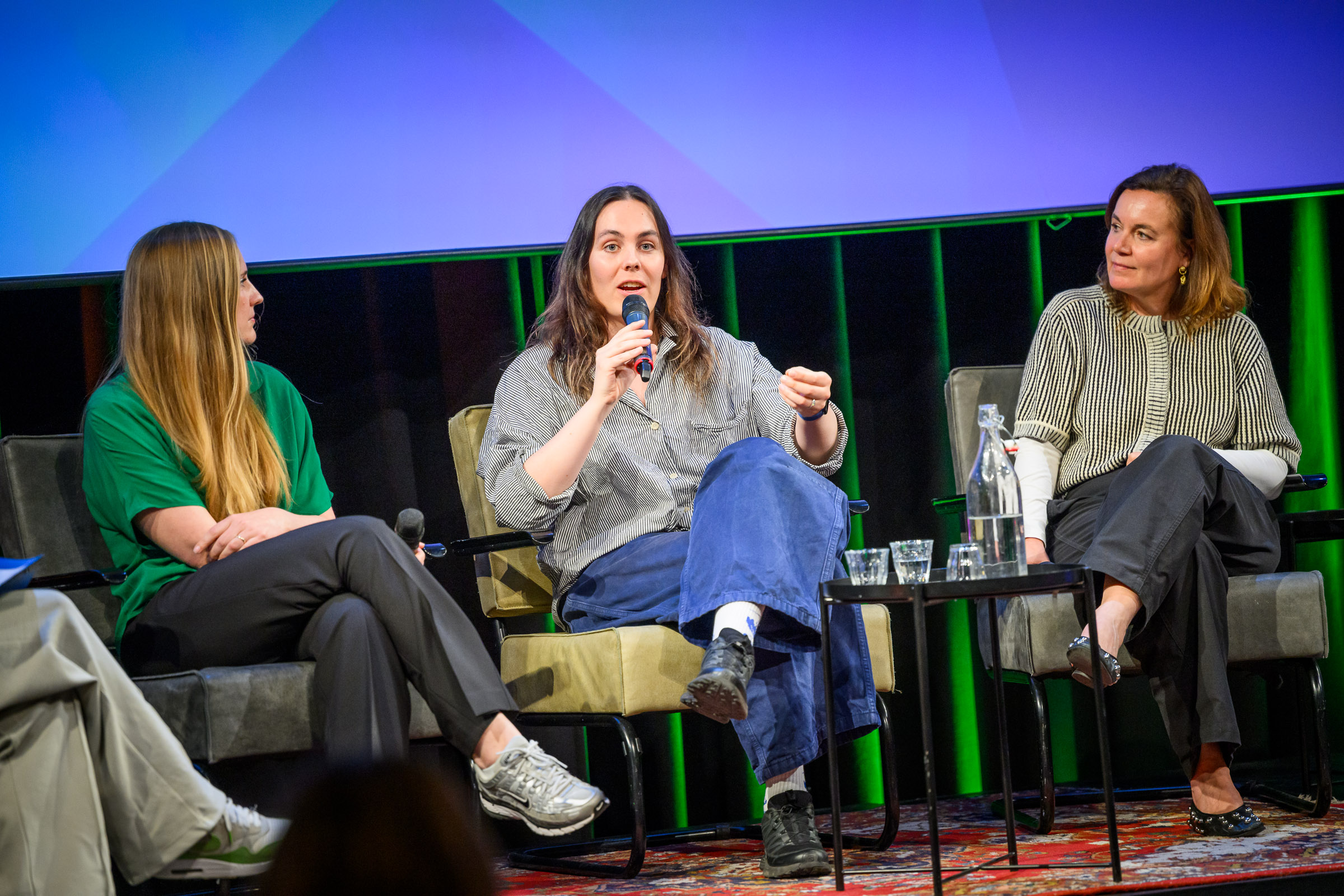
A follow-up panel with professionals from the audiovisual sector – including our partner, Abel Enklaar from VPRO Medialab – explored how AV media can function as a strategic infrastructure for Europe. Not only can AV media shape narratives, but it also support democratic resilience and cultural cohesion.
Participants reflected on the growing importance of European-owned media and digital infrastructures, particularly at a moment when questions around platform dependency, AI governance, and information integrity are becoming increasingly central to Europe’s democratic resilience.
Scaling Europe’s Creative Future
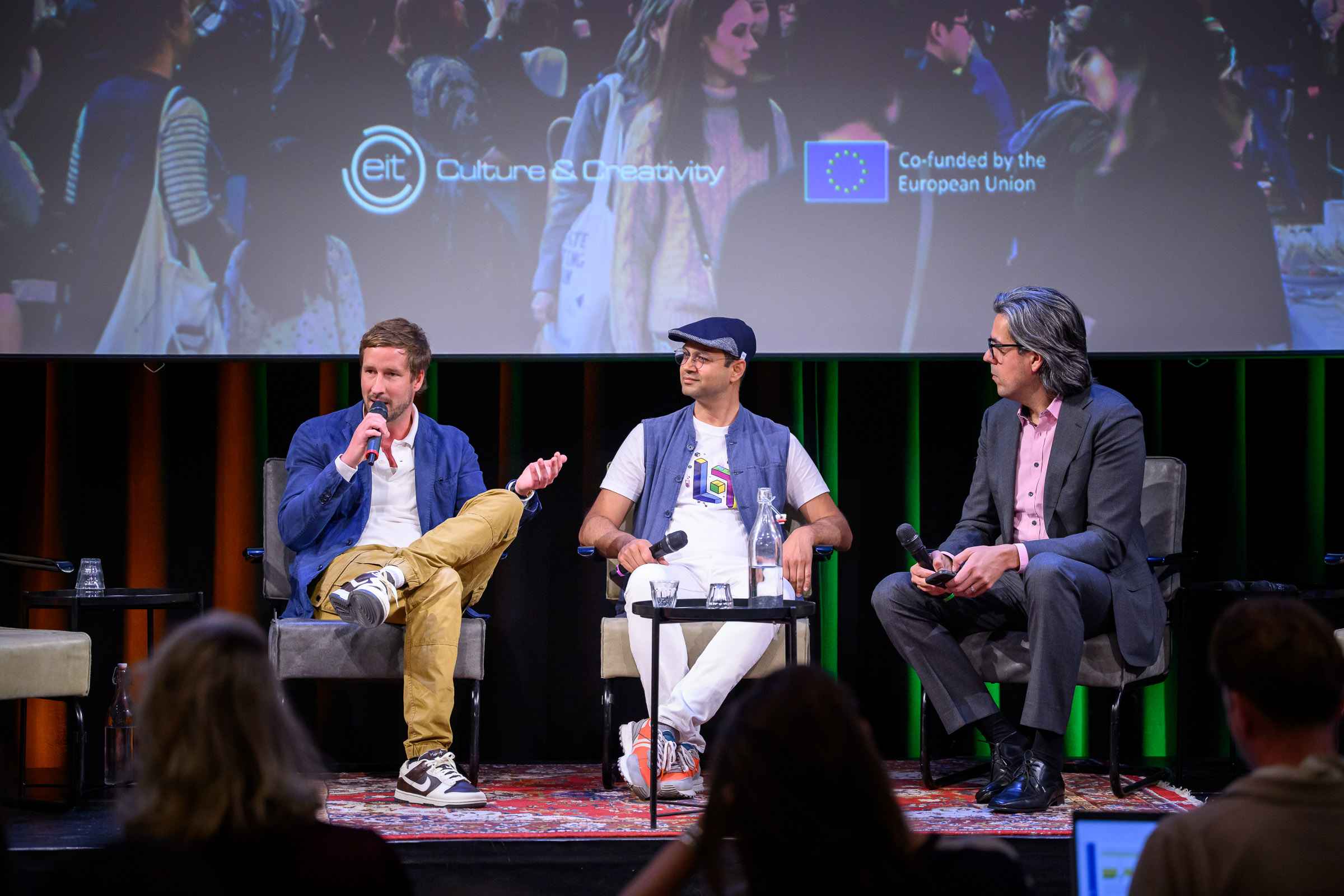
The final session, Scaling Europe’s Creative Future, focused on one of the sector’s defining challenges: how to move from strong local initiatives to sustainable models that can scale across Europe. Moderated by EIT Culture & Creativity’s Director of Business Creation, Javier Arias, the session brought together voices from across the ecosystem, including Business Creation beneficiary Shivam Dhawan from startup Leren Leren and EIT Culture & Creativity venture Salon.
The discussion emphasised the need for investment, collaboration, and policy support to unlock the full potential of the cultural and creative industries. A recurring theme throughout the conversation was that Europe’s cultural and creative sectors do not lack innovation or entrepreneurial talent, but often face fragmentation between regional ecosystems, investment structures, and market access. Participants discussed how stronger European support frameworks and cross-border collaboration could help bridge this gap.
Building momentum for collaboration
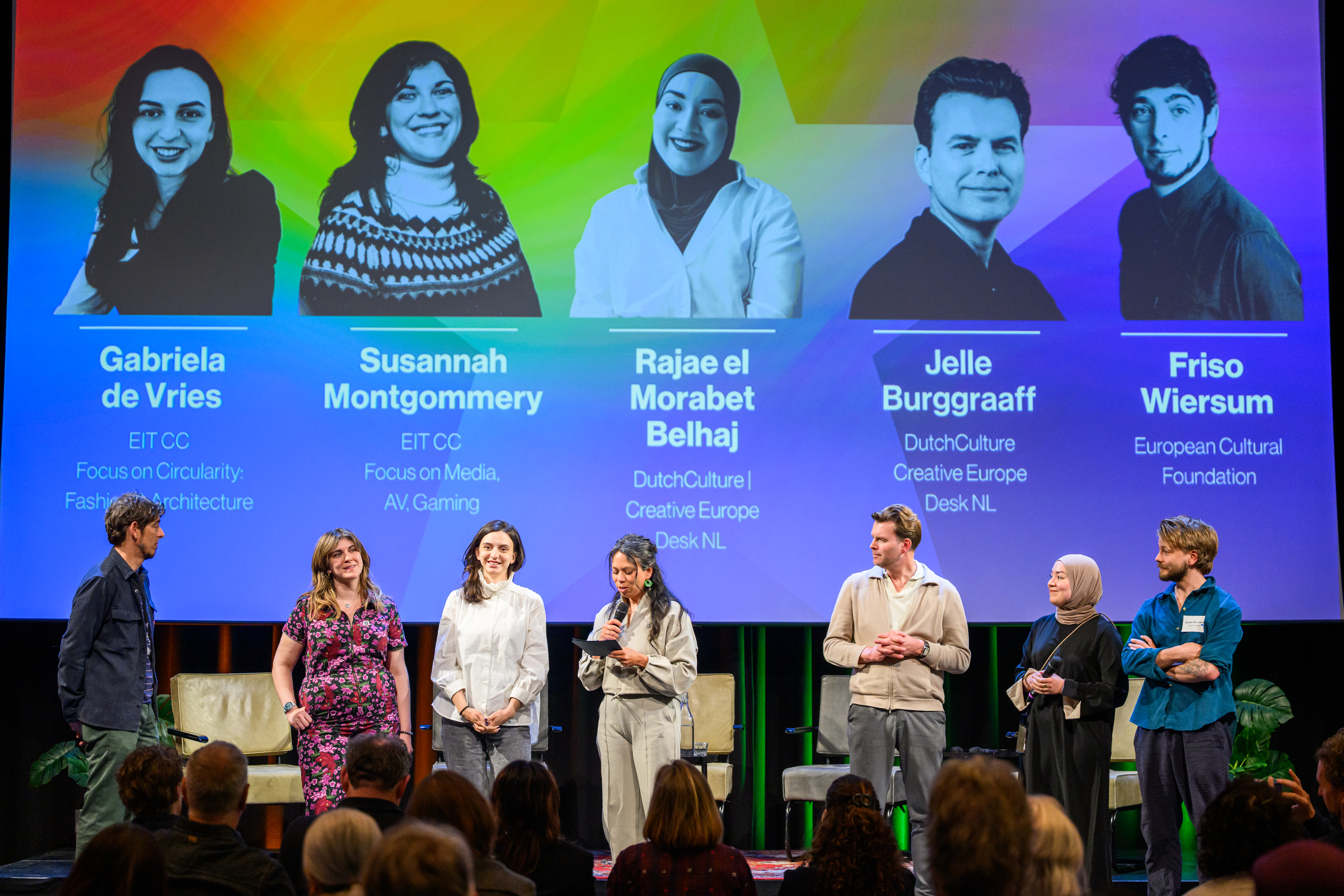
Throughout the Open Day a central theme emerged: innovation in the cultural and creative sectors happens through connection. By bringing together regional actors with European networks and perspectives, the event created a space where ideas could evolve, partnerships could form, and shared challenges could be addressed collectively.
The discussions in Amsterdam also pointed to wider questions facing Europe’s cultural and creative sectors – from digital sovereignty and responsible technology to circular production models and the challenge of scaling innovation across fragmented ecosystems.
As part of the broader series of Open Days taking place across EIT Culture & Creativity’s Regional Hubs in 2026, the North-West edition demonstrated the value of linking regional ecosystems to a wider European vision. It contributed to an ongoing conversation about how culture and creativity can help shape Europe’s social, democratic, and economic future.