
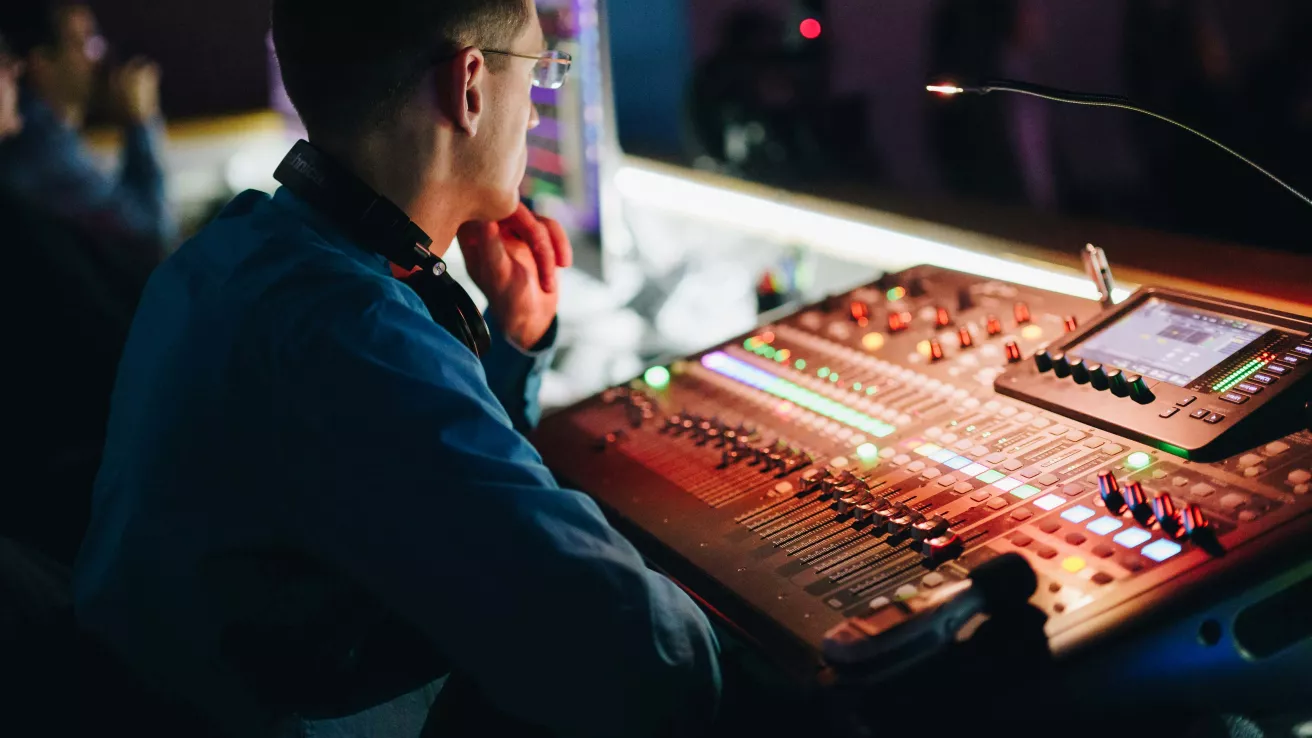
Black Goblin, an Edinburgh-based audio technology startup, is helping sound professionals reclaim time for creativity. Featuring in EIT Culture & Creativity’s 100-to-Watch list and a participant in our Scale Post-Acceleration Programme, the company has developed Thol, an AI-powered tool designed to streamline audio spotting in film and TV production.
Sound is the invisible force behind the emotional power of film and television. It builds atmosphere, signals tension, and anchors audiences in believable worlds – whether through the subtle rustle of leaves or the creak of a door in a spooky house.
Behind this sensory experience lies a highly collaborative and creative discipline. Sound designers, editors and mixers work closely with directors and producers to craft immersive audio landscapes. Their work includes ambient sound creation, Foley recording, and the layering of sound effects, where creative choices support the narrative.
Yet, despite its creative core, audio post-production often requires time-intensive manual processes. A significant portion of a project – estimated at 30–50% – is spent on technical, repetitive tasks, taking time away from more creative work.
One of the most demanding of these tasks is audio spotting: the process of identifying where sound elements need to be added or enhanced. Often, audio professionals repeatedly watch the same scenes, marking each cue with precision. It’s a labour-intensive step that can take between eight and twenty times the duration of the footage itself. For a feature-length film, that can easily add up to days, even weeks of work.
Automating the repetitive, unlocking the creative
This challenge is precisely where startup Black Goblin sees an opportunity. Based in Edinburgh and part of EIT Culture & Creativity’s 100-to-Watch startup has developed Thol, an AI-assisted tool designed to streamline the spotting process.
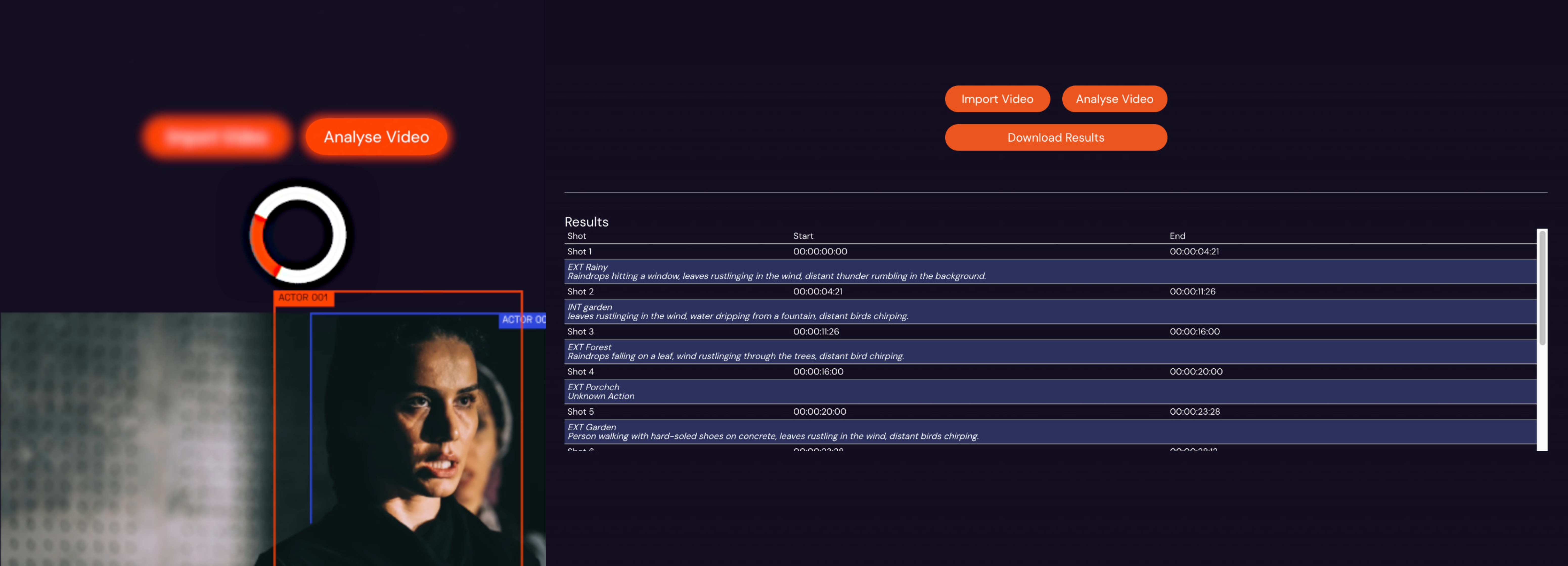
Rather than replacing creative decision-making, Thol is intended to support it. The software uses AI models to analyse audiovisual content, interpret context, and identify potential sound events within a scene. For example, it might distinguish whether a sequence takes place in a café or a forest, and then detect actions such as footsteps, rainfall, or any other movements in a scene that might require sound design input.
By automating the initial identification and labelling of these elements, Thol reduces the need for manual tagging and organisation. Sound professionals still maintain control of the process and will cross-check the output against the original footage. But it reduces the repetitive reviewing – freeing up time for more artistic dimensions of a project, like creating sound effects.
A grassroots innovation from within the industry
Black Goblin’s origins lie in hands-on industry experience. Co-founded in 2018 by CEO Ana Betancourt, the company initially operated as a production studio, delivering sound recording services for film and television.
As AI-powered tools have entered the industry, the team observed scepticism within the audio community – particularly around products that generate synthetic sound, which potentially compromise authenticity. However, through extensive conversations with peers, audio spotting consistently emerged as an area where professionals are excited about automation.
In response, Black Goblin pivoted towards audio technology in 2024, with the plan to develop a solution. To define the software, the team conducted extensive interviews with industry professionals, including Emmy and Oscar winners, and observed real-world workflows to identify specific pain points. These insights informed the first iterations of Thol.
Early validation came through participation in the MyWorld Creates initiative in 2024 in collaboration with the BBC. Their pilot project demonstrated significant efficiency gains – saving 200 hours of manual work on a 90-minute production.
Scaling with EIT Culture & Creativity support
Building on this momentum, Black Goblin joined the EIT Culture & Creativity Scale Post-Acceleration Programme in 2025. The programme played a key role in helping the company transition from research and development to a more commercially focused strategy.
“The post-accelerator was crucial in helping us to map our vision into tangible milestones. One of the things we did was to launch the private beta version of our product,” says Ana Betancourt, Black Goblin CEO.
That transition has already shown tangible results. In early 2026, Black Goblin made its beta version public, which led to a 175% increase in usage within its first few weeks. Over the past six months, more than 200 professional projects have used the pilot platform.
Expanding horizons in a growing market
Now a team of five, Black Goblin is positioning itself within a rapidly expanding audiovisual landscape. The European film and television sector alone represents a market worth €142 billion in 2024, with growth driven by online subscriptions, reflecting both strong cultural output and increasing global demand.
Currently, users can test the tool with limited footage, with subscription-based versions – featuring expanded functionality – expected later in 2026. While the company’s immediate focus remains on film and TV production, it is already looking towards adjacent sectors. Non-linear media – including gaming, as well as augmented and virtual reality – offer new opportunities where complex sound design is equally critical.
At the same time, Black Goblin is embedding sustainability into its development strategy. Through participation in the CoSTAR Evolve programme, the company is exploring ways to reduce the environmental footprint of its technology, which currently relies on cloud-based infrastructure.
Rebalancing the creative workflow
As AI continues to reshape creative industries, Black Goblin’s approach highlights a more targeted application: not replacing artistry but redistributing effort. By reducing the burden of repetitive tasks, tools like Thol may enable sound professionals to focus more fully on the creative decisions that define audience experience.
Visit our 100-to-Watch list to discover more exciting ventures in Europe’s cultural and creative sectors.