
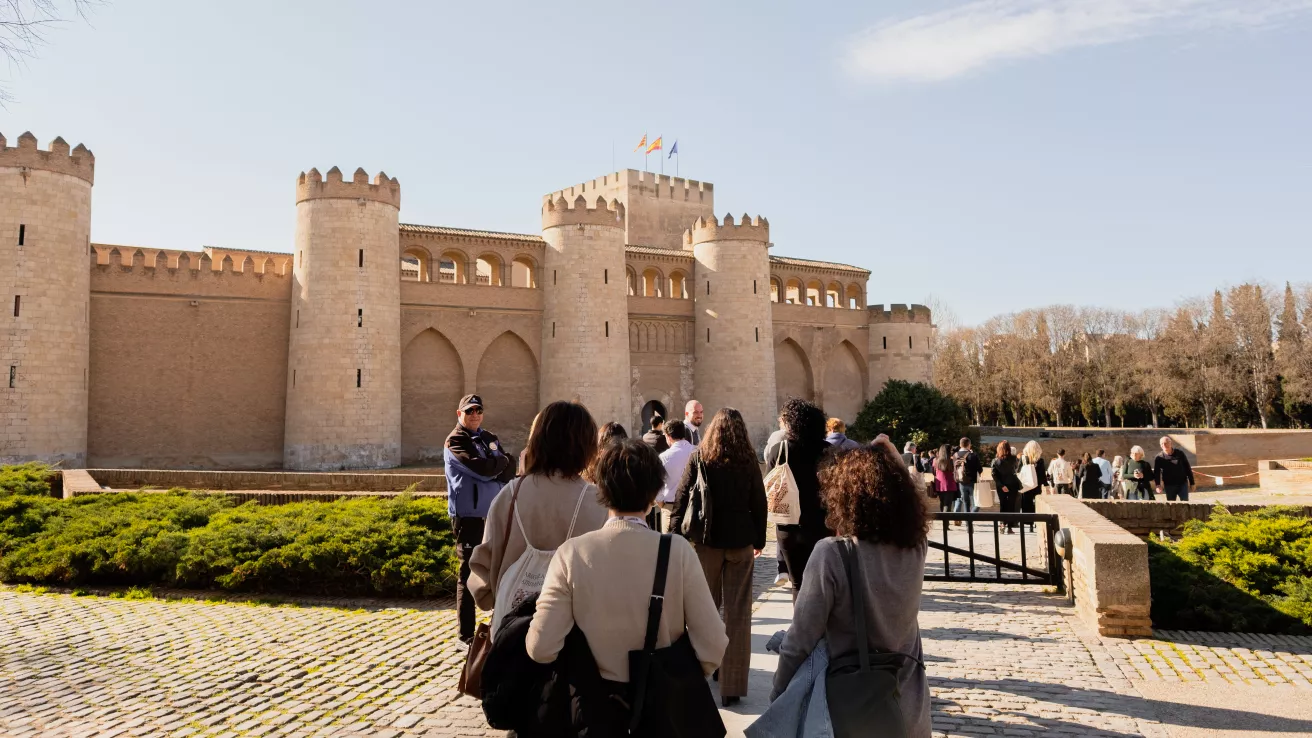
For many cities, a rich cultural heritage can be defining strength and a growing challenge. Historic centres, cultural landmarks, and living traditions enrich daily life for locals and attract visitors from across the world.
However, this success can also create pressures – where tourism risks overshadowing local life, straining urban systems, and eroding the cultural fabric that makes these places special in the first place. At the same time, heritage is too often regarded as something to preserve, rather than as a dynamic resource that can inspire creativity and innovation today.
The Forum on Tourism and Cultural Heritage in Urban Destinations, hosted by the City of Zaragoza on 12-13 March 2026, addressed a central question: how can tourism models evolve to protect cities and communities while creating vibrant urban life around heritage sites?
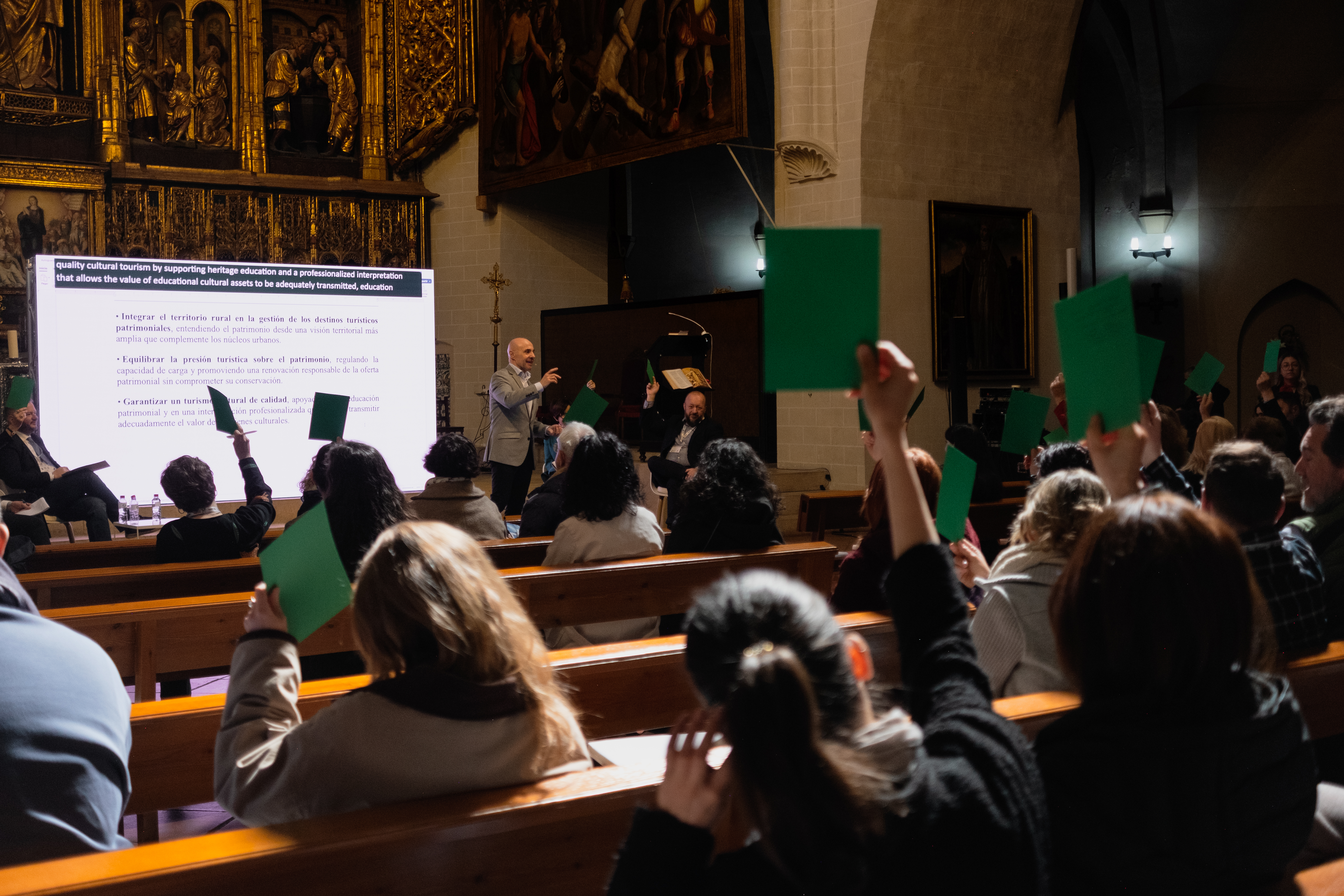
Places are people
The forum brought together cities and practitioners from across Europe. Speaking at the event, the Director of EIT Culture & Creativity Regional Hub South-West, Fabio Palma, noted that “places are people,” quoting Portuguese poet Fernando Pessoa, stressing that heritage is shaped by residents and those who pass through.
As tourism grows as a cross-sectoral innovation area, Fabio called for collaborative ecosystems to manage rising global mobility while preserving local authenticity. Cultural and creative industries can collaborate with other sectors to reflect the aspirations of younger generations, in the spirit of the New European Bauhaus – beautiful, sustainable and together.
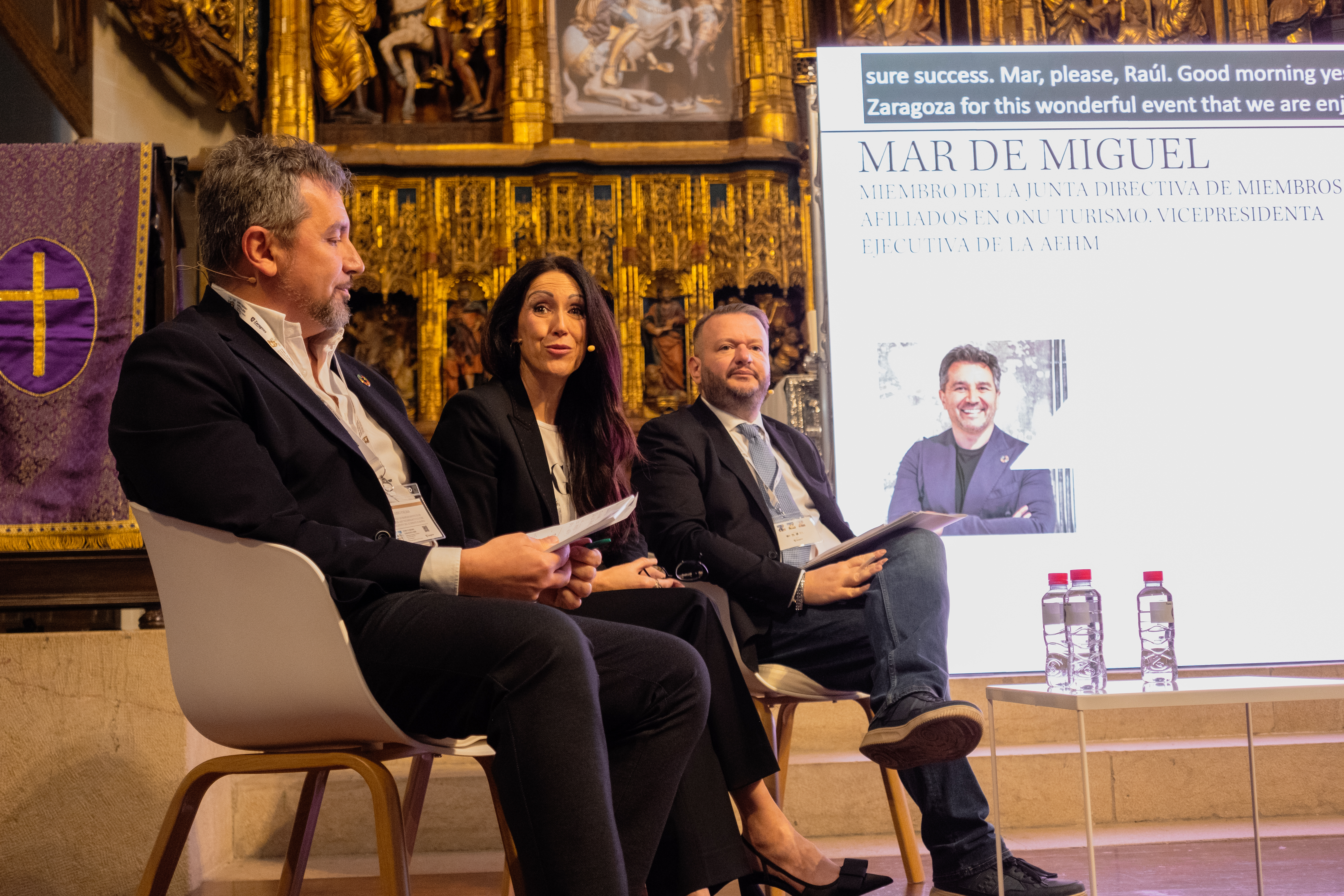
Cities & Regions Network workshop – exploring next-generation tourism
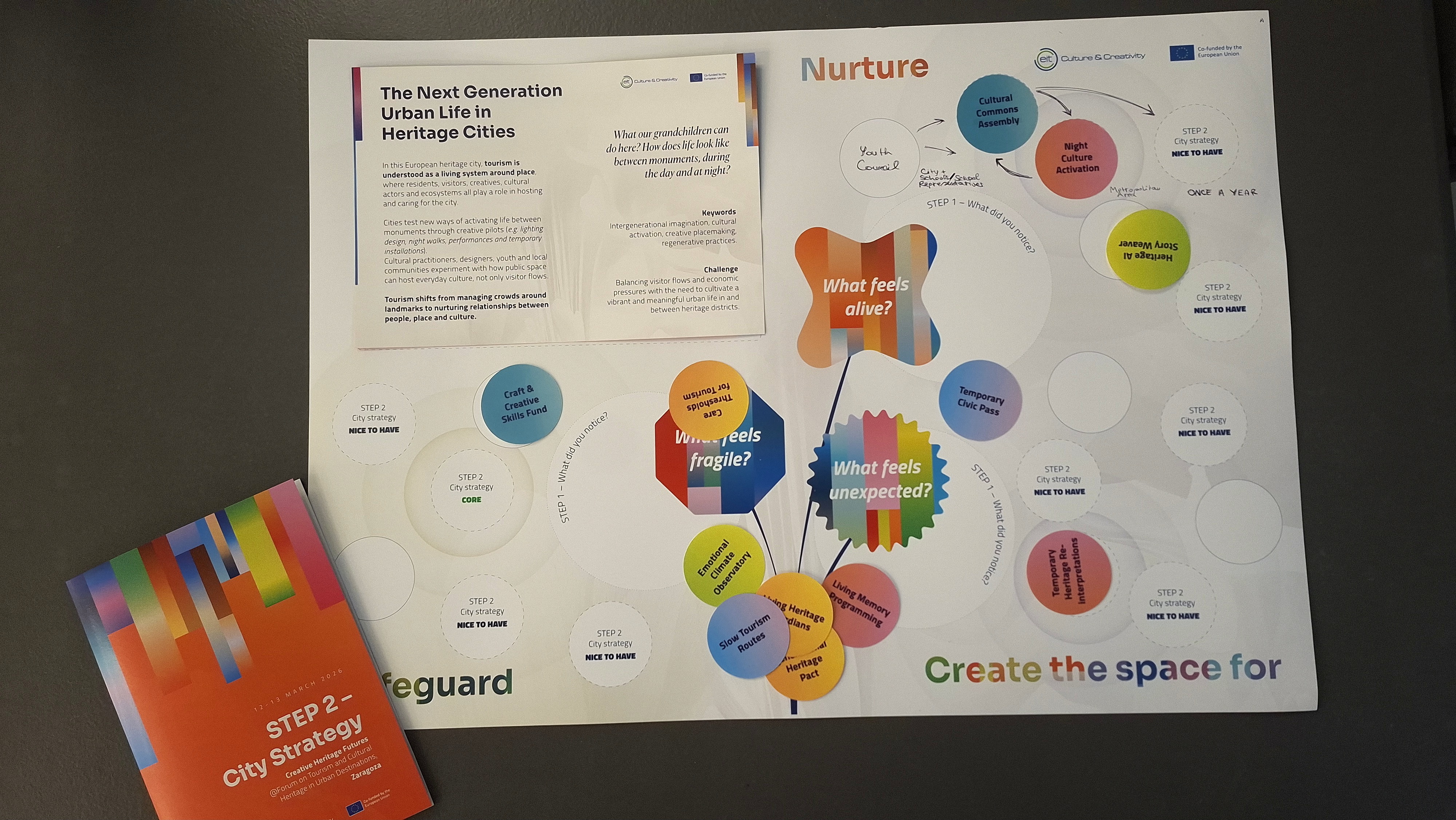
As part of the programme, EIT Culture & Creativity facilitated a participatory workshop on next-generation tourism, bringing together cities from across Europe to explore urban models that nurture place, safeguard communities and create vibrant life around heritage sites.
The workshop was organised through the Cities & Regions Network, a mission-driven community of EIT Culture & Creativity, focused on improving local decision-making through culture and creativity. Workshop participants from cities, international organisations (including UNESCO and the UN) and tourism bodies worked together to explore possible actions for Next Generation Heritage Cities. Participants were encouraged to view tourism as a living system of relationships between people, place, culture and environment.
Several key insights emerged from the discussions:
- Heritage needs strategies to expand from preservation to “living heritage”, through storytelling, digital tools and new cultural experiences – including AI-powered heritage interpretation.
- People and emotions are central, with community participation and shared experiences essential to keeping heritage meaningful for residents and visitors.
- Nature, digital spaces and cities are interconnected, opening new ways to experience and interpret heritage across physical and virtual environments.
- Intergenerational dialogue is a foundation for heritage innovation, ensuring that traditional knowledge continues to evolve through new creative practices.
- Inter-city collaboration within regions is key to managing tourism flows more effectively, developing decongestion strategies, and fostering authentic, immersive cultural experiences across urban areas.
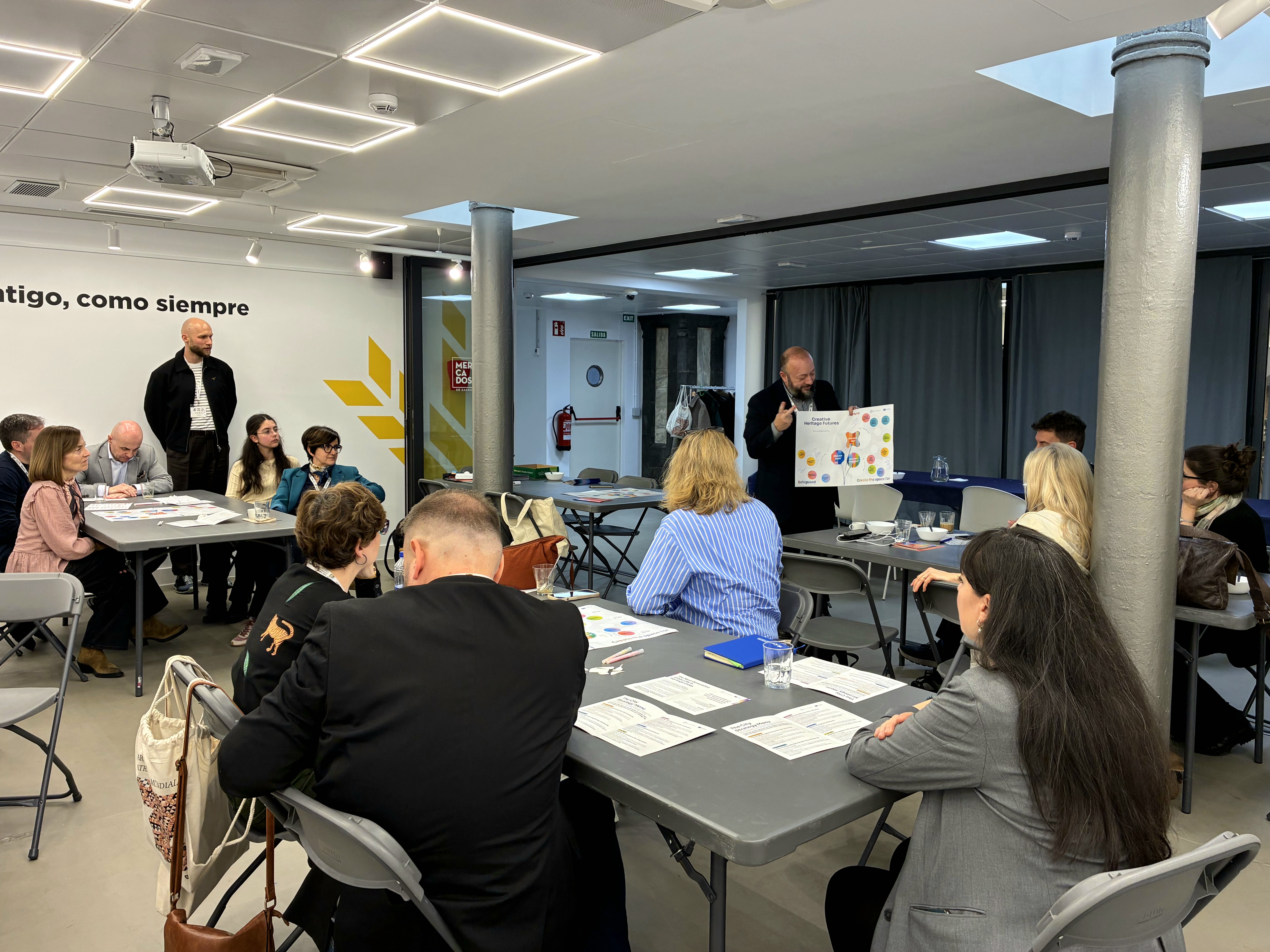
How change is being felt in heritage cities today
Across the discussions, participants also reflected on what currently feels alive, fragile, and unexpected in heritage cities.
What feels alive is the growing role of dialogue between generations, where traditional crafts and cultural practices become sources of new creativity and cultural activation –from storytelling to night-time programming.
What feels fragile is the transmission of this knowledge, as well as the balance between tourism and everyday urban life in heritage districts. Participants highlighted the risks that mass tourism poses to local communities, making it harder to sustain spaces where residents can live, meet and create.
What feels unexpected is the role of creative sectors – artists, designers and digital innovators – in reshaping tourism experiences. New connections are emerging between cultural sites and artefacts, digital and natural environments, enabling heritage to be experienced in more immersive and accessible ways.
What is still holding cities back
At the same time, key challenges remain:
- Identifying and connecting key stakeholders working on tourism across sectors and governance levels.
- Translating cross-sectoral insights on tourism into long-term policies and regional investment models.
- Exchanging practices of successful local and regional experiments across EU cities and regions.
- Addressing gaps in tourism data collection, activity tracking and understanding the full tourist journey, including after the visit.
Collaboration opportunities across Europe
The workshop highlighted strong potential for joint action through EIT Culture & Creativity. In particular, through connecting cities and ecosystems, testing participatory cross-sector innovation approaches and supporting creative heritage initiatives. It showed the value of identifying key topics and challenges to convene relevant stakeholders and foster mutual learning.
As highlighted in the closing discussion, the forum was not an endpoint but the beginning of a shared path. By working together across disciplines and cities, participants expressed interest in shared experiments to explore new models where tourism contributes to cultural vitality, community wellbeing, and thriving heritage places.
EIT Culture & Creativity looks forward to continuing this dialogue and supporting cities interested in exploring creative heritage futures. Through our Regions & Cities Network, we seek to strengthen collaboration between public authorities, tourism stakeholders and creative industries to ensure heritage remains meaningful for future generations.
Join the Cities and Regions Network
If you are working to address these challenges, the conversation continues through the Cities and Regions Network. The network brings together policymakers and stakeholders across sectors to bridge silos and better connect culture and creativity with wider priorities such as economic development, innovation and urban policy. Its core purpose is to generate and test new ideas, ultimately leading to the development of integrated, collaborative policy actions, driven by and for culture and creativity.
Join the Cities & Regions Network to connect with peers across Europe and contribute to shaping next-generation heritage approaches.
You can also download the EIT Culture & Creativity Creative Heritage Futures toolkit to spark dialogue, co-design strategies and explore collaboration between cities and cultural and creative professionals.