
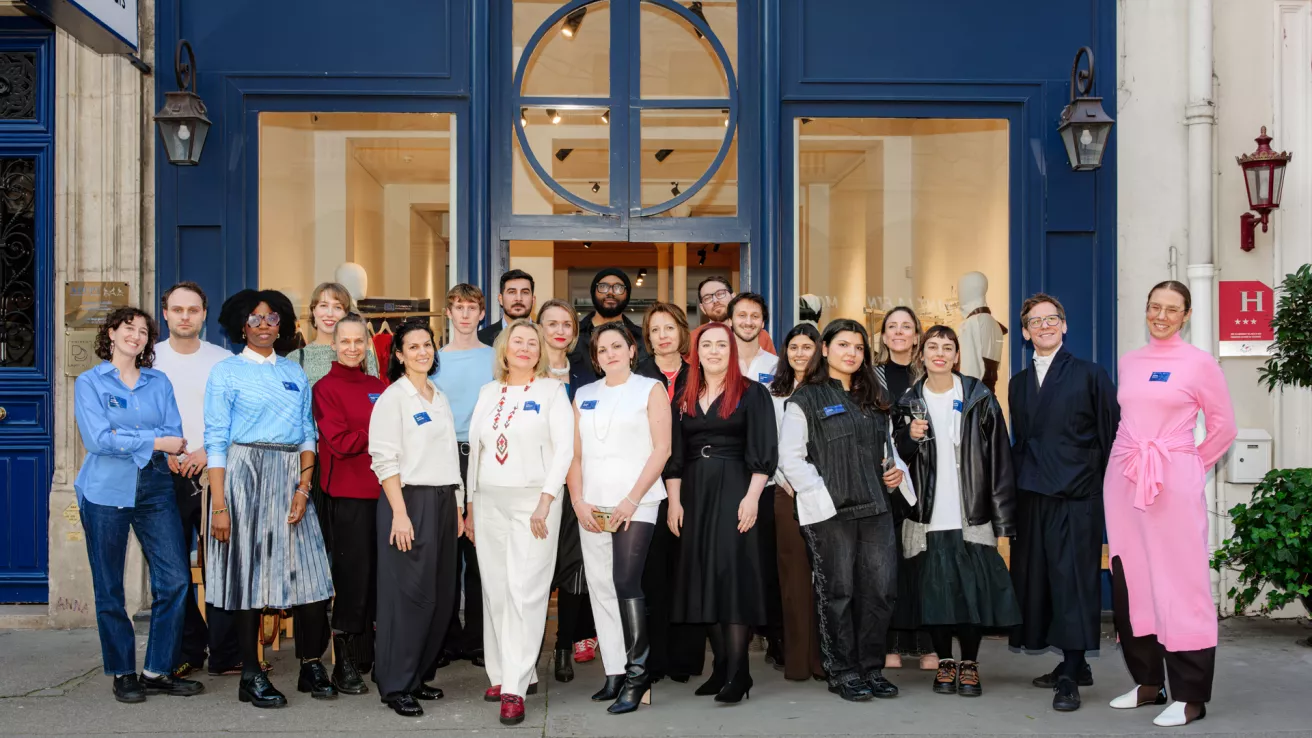
In fashion today, waste isn't a side effect, it's a structural issue. It runs through every link of the chain - from material to market, from design to distribution - and it won't be solved by any one person, brand or border. Yet the sector is ready for change and open to collaboration.
On 2 March, as part of Paris Fashion Week, we brought 80 participants together at Atelier Néerlandais for ‘Beyond Adaptation: The Shift to Circular Practices’, exploring how a sustainable future in fashion is possible, but not a path any of us can tread alone.
The event marked the conclusion of the first edition of the NEB Fashion Adaptor programme, a 10-week circular training led by EIT Culture & Creativity which selected 12 brands to support their transition towards alternative, more responsible business models.
Sharing the space with fellow designers, investors and policymakers, each brand demonstrated tangible progress towards circularity. Beyond a showcase, it was a conversation. From upcycling materials to downscaling waste, the exchanges were as wide-ranging as they were urgent. Here is a closer look at what was shared, debated and envisioned.
Local answers to global challenges
Miriam Kathrein and Audrey Alamy, programme leads for the NEB Fashion Adaptor at EIT Culture & Creativity, moderated the event, guiding discussions that moved from local material innovation and craft heritage, to digitisation and traceability, and ultimately to the question of what a truly global exchange in fashion could look like.
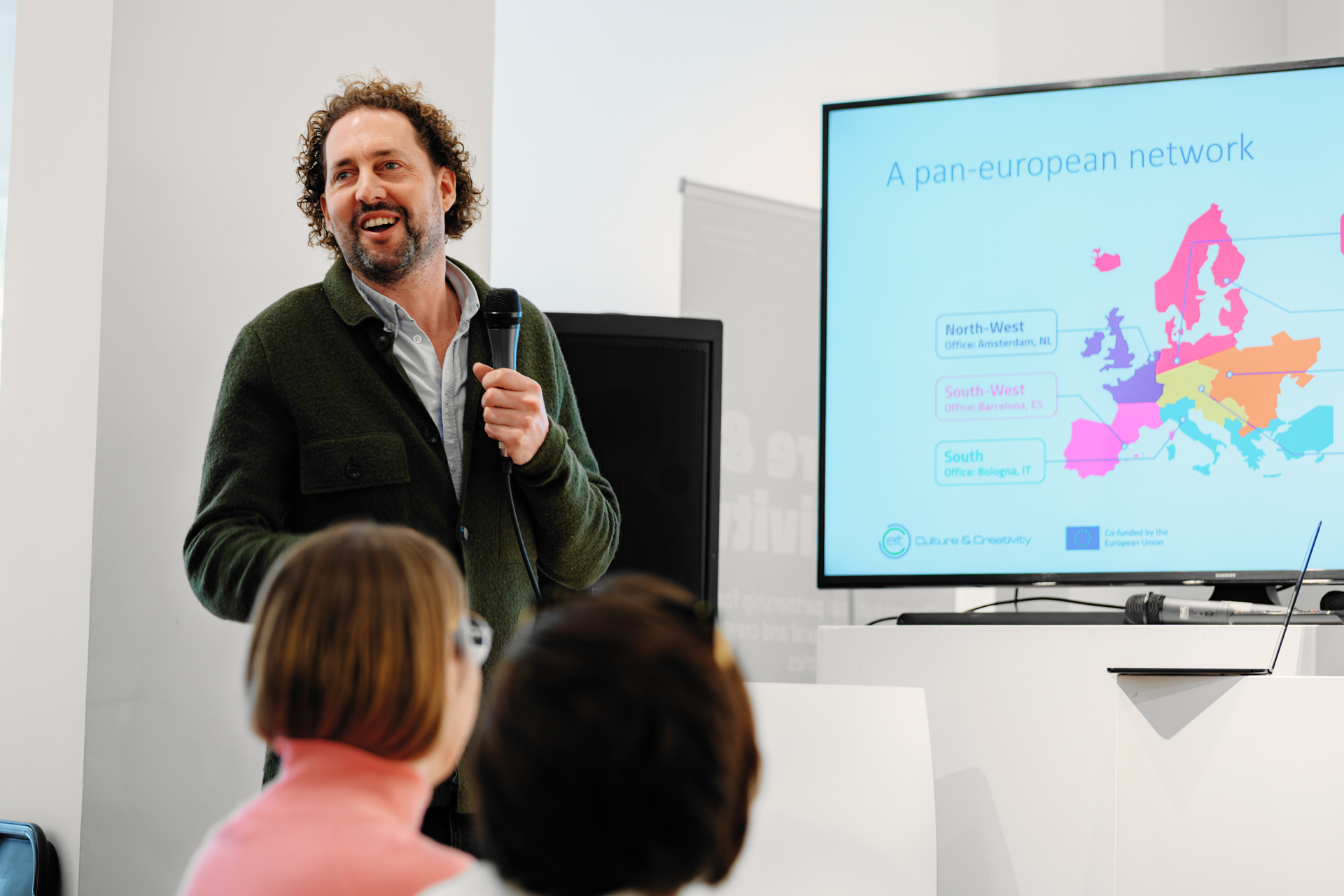
Gijs Gootjes, Director of EIT Culture & Creativity Regional Hub North-West, opened the day: "EIT Culture & Creativity acts as a catalyst for the transition to a more resilient, sustainable and responsible society. In fashion, that means bridging public and private players and fostering collaboration throughout the value chain". From North-West to South-East Alps, the Regional Hubs played a key role in connecting ecosystems throughout the day and across Europe.
But building collaboration cannot stop at European borders. Fashion's waste problem is systemic and global, and so must be the solutions. The OR Foundation joined us from Ghana, one of the countries most impacted by discarded clothing. Its co-founder, Liz Ricketts, made the case for a true two-way exchange between the Global North and South, for landfills to empty and new production models to take their place: "There is no inclusion until both sides have reference points and are asking questions of one another”.
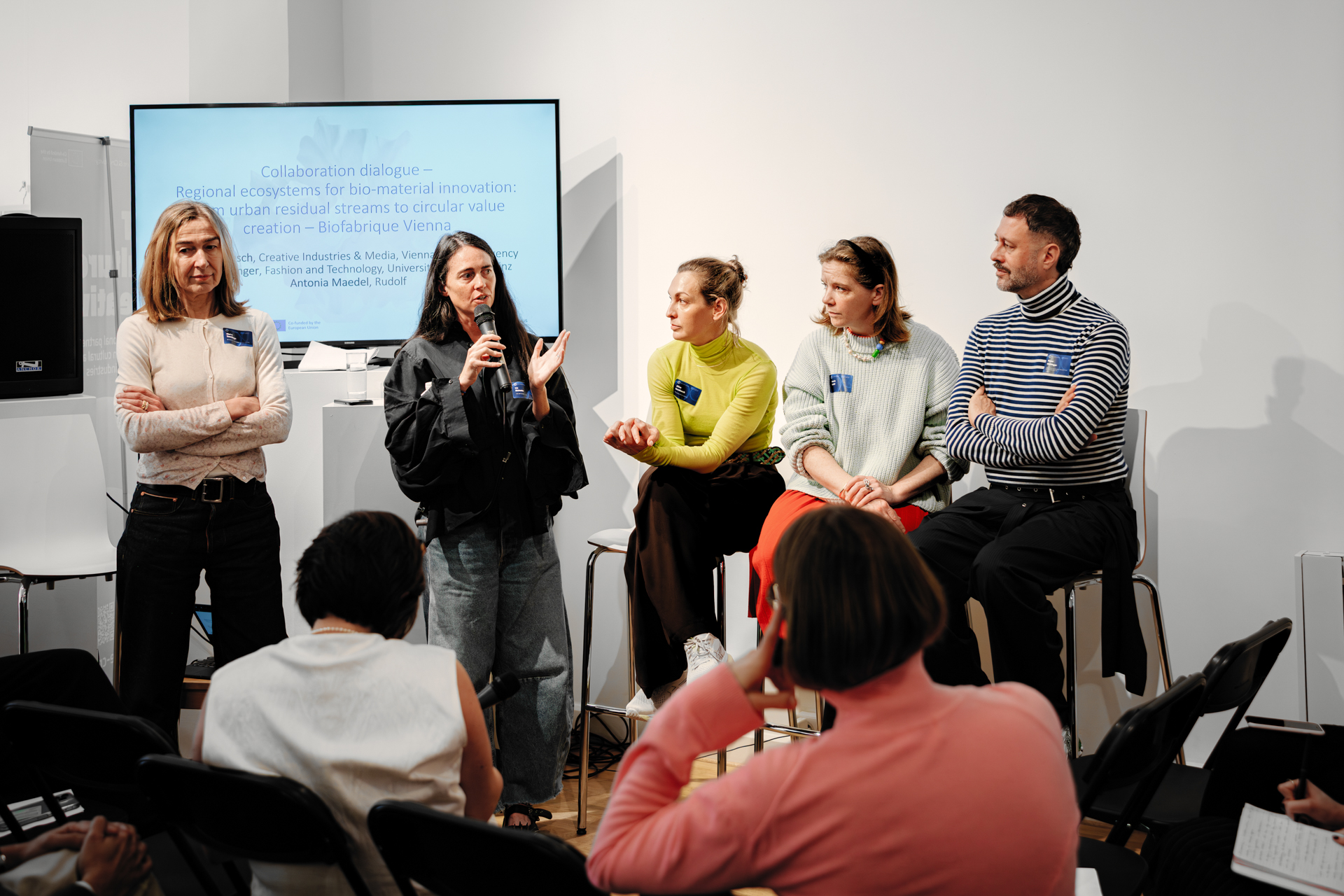
"Materials should stay local, ideas should travel", added Alice Jacubasch, from Vienna Business Agency. Sharing the stage with Antonia Maedel from Rudolf, and Peter Holzinger from Fashion and Technology, University of the Arts Linz, they presented Biofabrique, a pilot project transforming local food waste and invasive plants into dyes and pigments. Onion skins, carrot tops, red cabbage, and avocado pits become pastel-coloured fabrics, with each city's food waste producing its own distinct palette.
Food waste isn't the only overlooked resource. Inga Nemirovskaia from fashion brand LORE explained how they work with Alpine wool, reviving a fibre once central to regional textile traditions across Europe. Its production relies on a close network of people preserving the craft - partners located near one another to keep the process transparent and traceable.
While staying close to production is one important step towards traceability, digitisation can close the rest of the gap. BYBORRE presented how it is linking tech and textile, producing on-demand orders with a Textile Passport that details the full material journey. "We need to ask ourselves how we can create a fertile ground and a healthy ecosystem across Europe to support companies willing to innovate. Let's use digitisation - but with education and legislation to correct what is going wrong", said Borre Akkersdijk.
A new wave of innovation
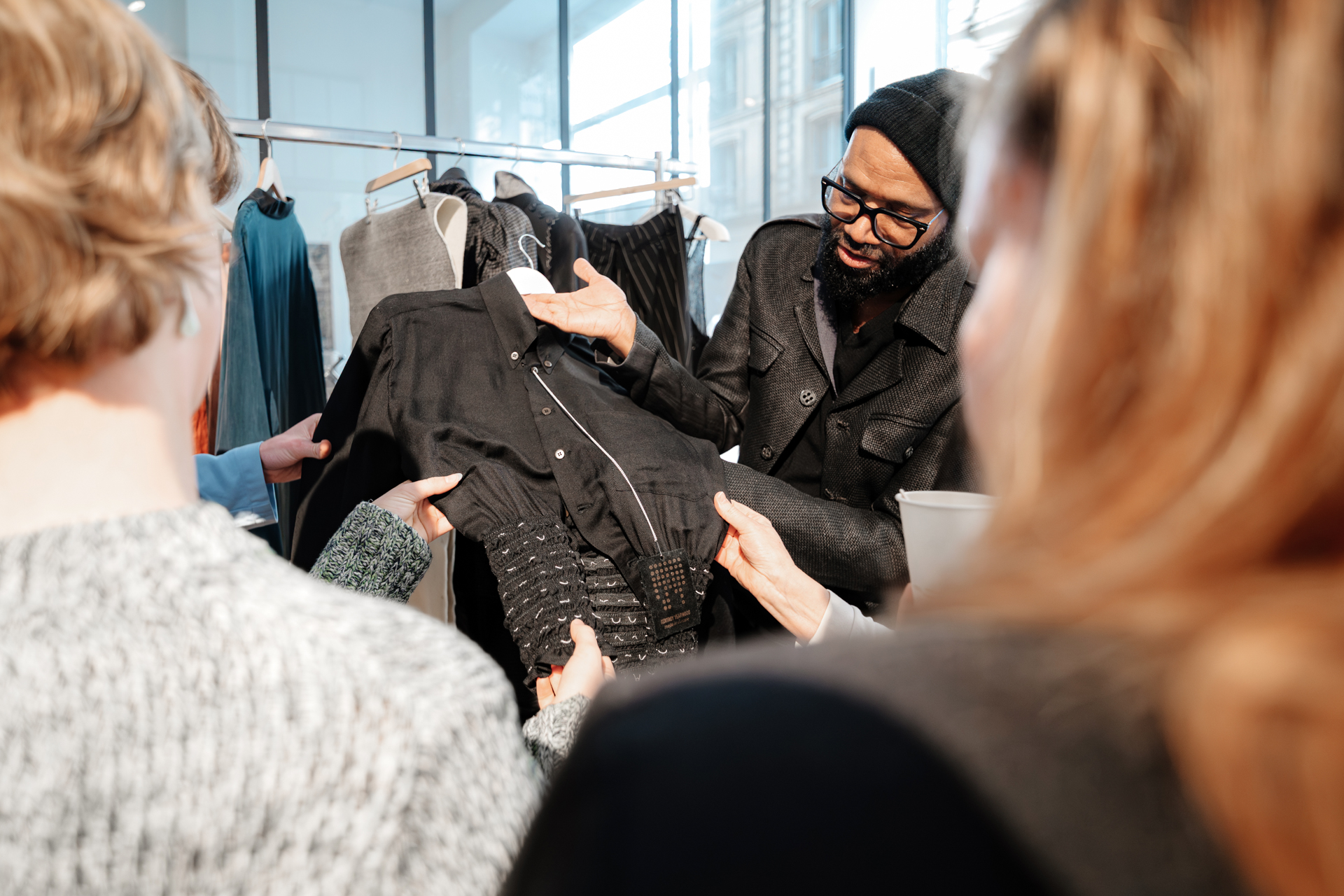
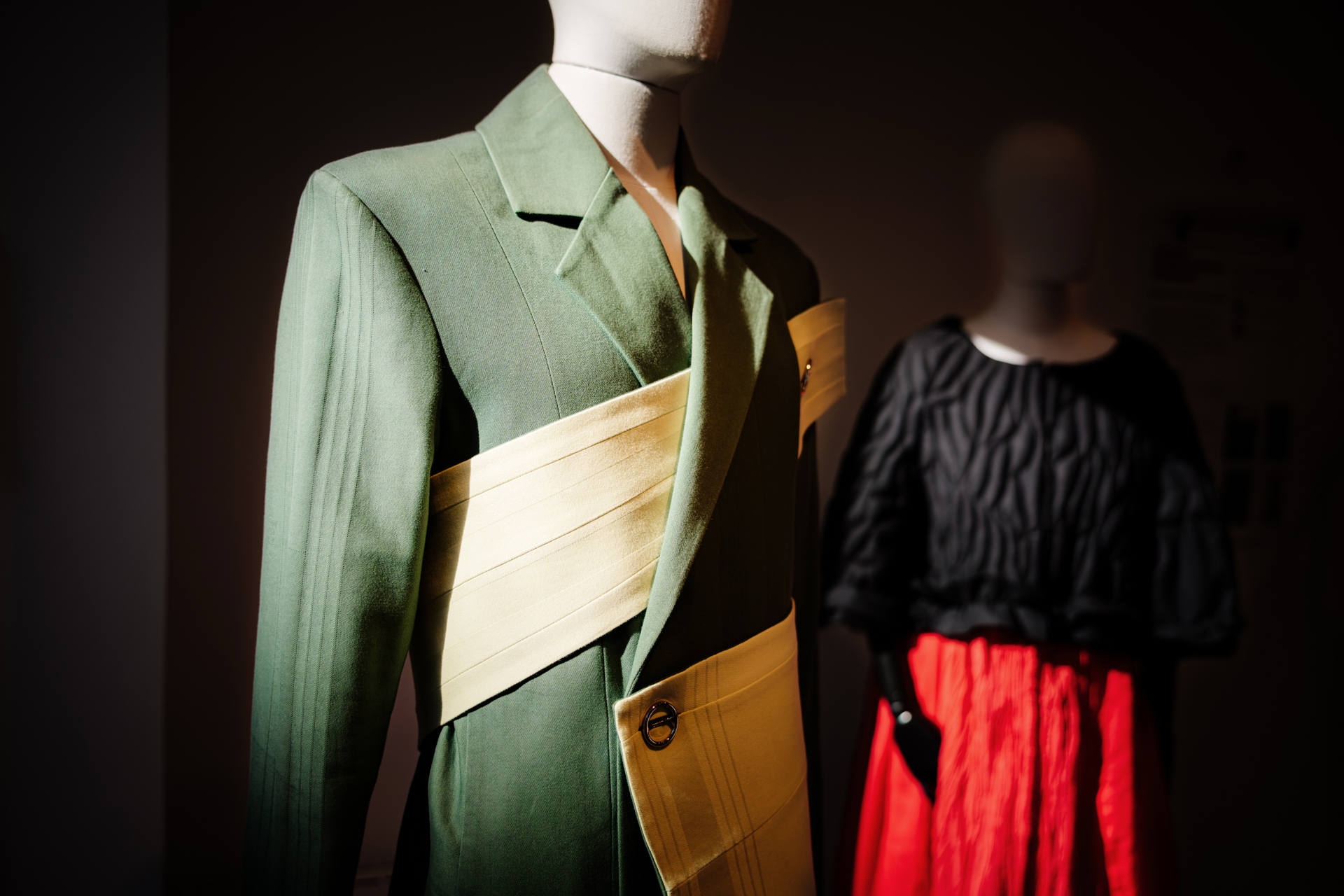
Alongside these external voices, the NEB Fashion Adaptor participants took to the stage to pitch their own innovations. From shirts made of recycled hotel linen and soles grown from food waste, to traditional craftsmanship integrated into modern design, each brand brought something different to the table.
- HACOY, Munich, Germany: Hyper-local, EU-sourced materials and the 100km rule
- COSMO, Tbilisi, Georgia: Grape-based bio-materials for leather handbags
- ADIRELOUNGE, Paris, France: Plant-based, on-demand textiles and digital product passports
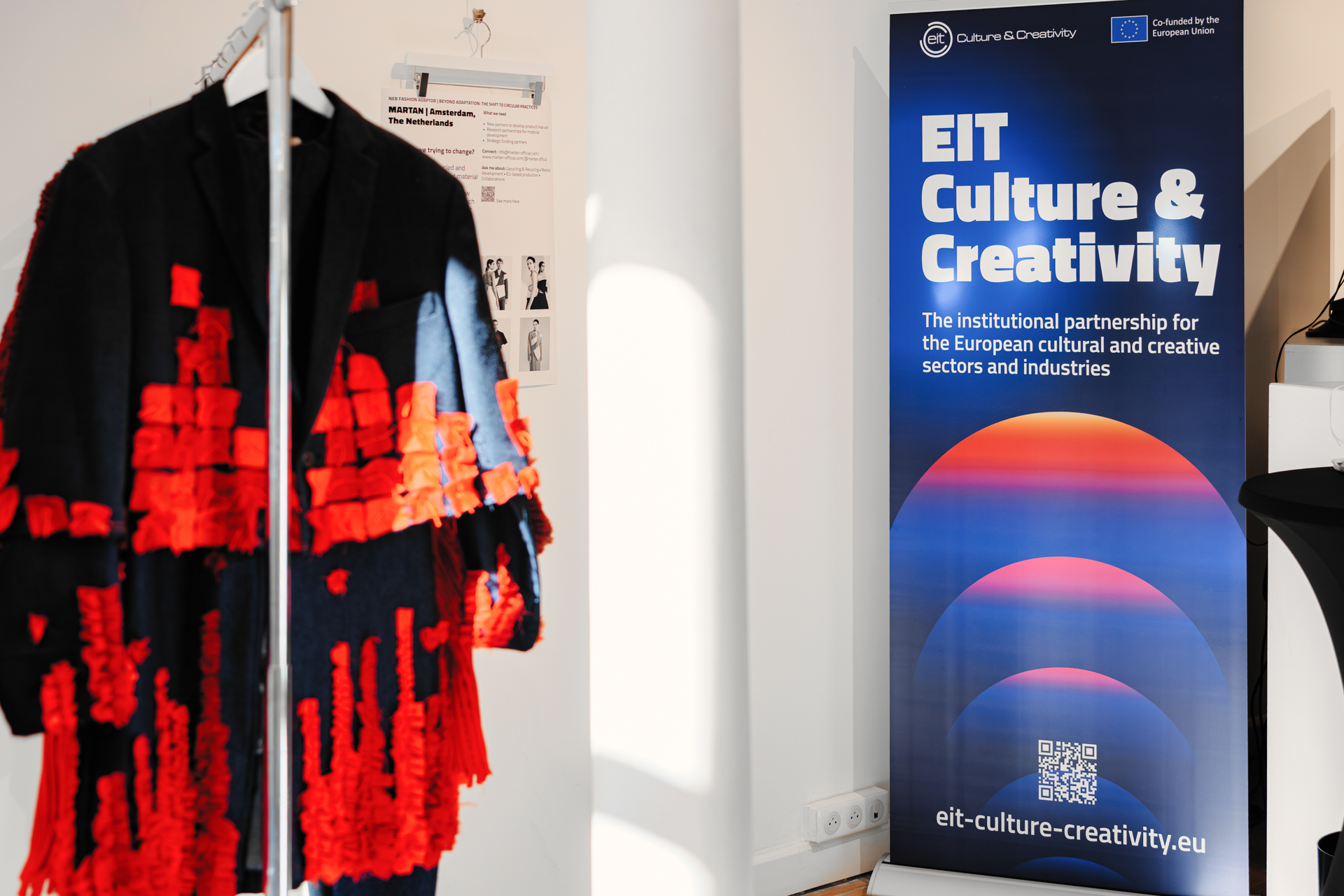
- MARTAN, Amsterdam, The Netherlands: Upcycled hotel linen and high-end circular garments
- NORIA ANIS, Bucharest, Romania: Multi-lifecycle design and timeless aesthetic
- MOE, Stockholm, Sweden: Zero-waste cutting, modular, mono-material wearables
- STRIBOR, Sarajevo, Bosnia and Herzegovina: Small-batch circular production and local designer support
- ID.EIGHT, Florence, Italy: Bio-based, repairable sneakers and circular take-back
- CHEZ NOUS, Paris, France: Certified fabrics connecting Tunisia and France through responsible, genderless fashion
- TATOSHKA TM, Kyiv, Ukraine: Mono-material children's fashion and resilient local production
- KENTROY YEARWOOD, Amsterdam, The Netherlands: Avant-garde circular design and deadstock sourcing
In the pitching round, the brands not only presented what they have to offer, but also what they need to go further: capital, collaboration and patience.
Building structures for change
For innovation to scale, the right frameworks and funding must follow.
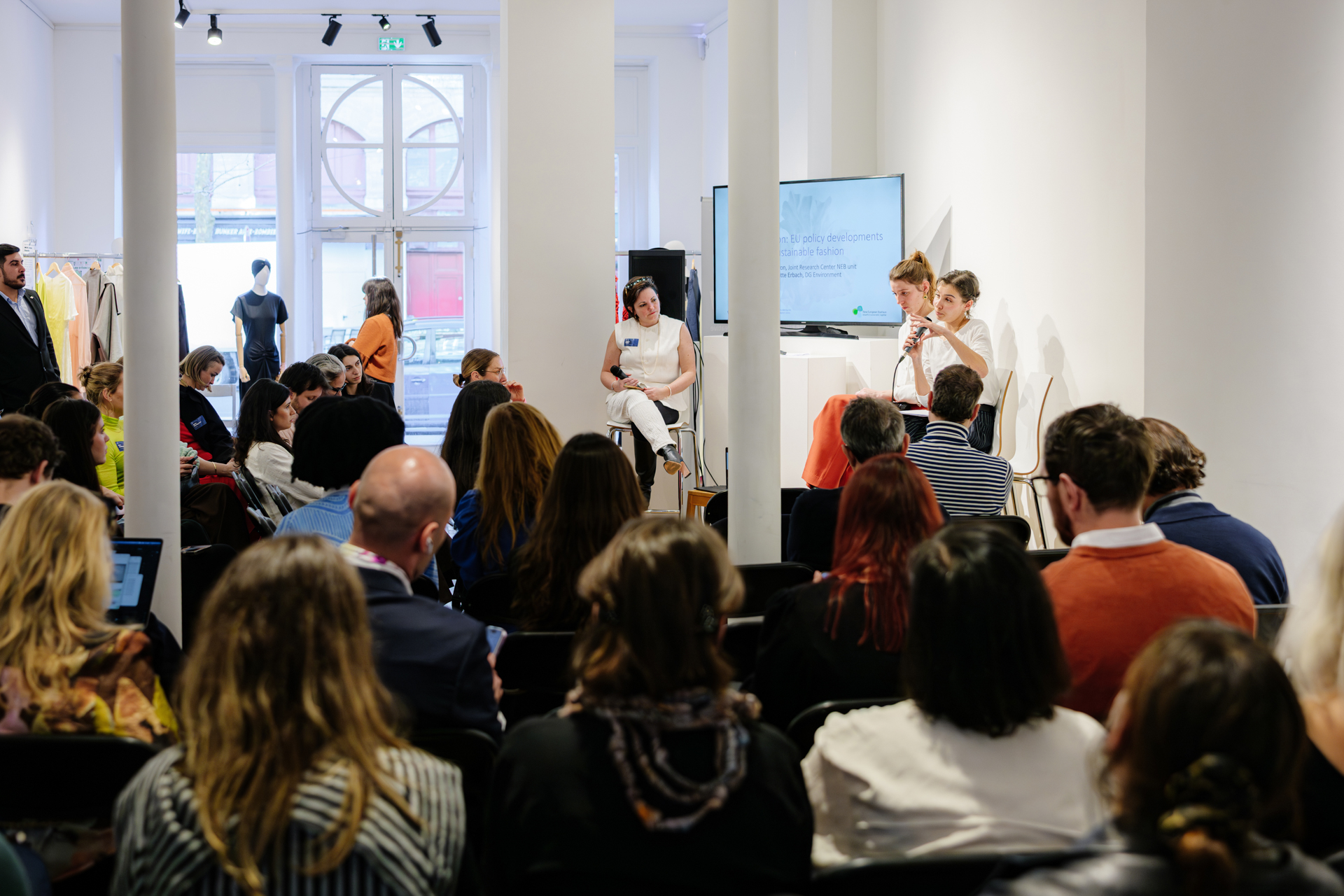
We were joined by Solène Gautron from the New European Bauhaus, and Charlotte Erbach from DG Environment for policy reflections. Solène invited participants to engage with the NEB, the EU's initiative bringing culture and community to the heart of the Green Deal built on the principle that there is "no trade-off between environment and social inclusion”.
Charlotte mapped the regulatory landscape ahead: the Ecodesign for Sustainable Products Regulation (ESPR), Extended Producer Responsibility (EPR), the Circular Economy Act and the Digital Product Passport. The message was clear - brands need to start preparing now, building the data infrastructure to understand their fibres and where they come from. But regulation is not a one-way street: the European Commission regularly runs consultations to gather feedback from the industry, with small and medium enterprises actively taken into account.
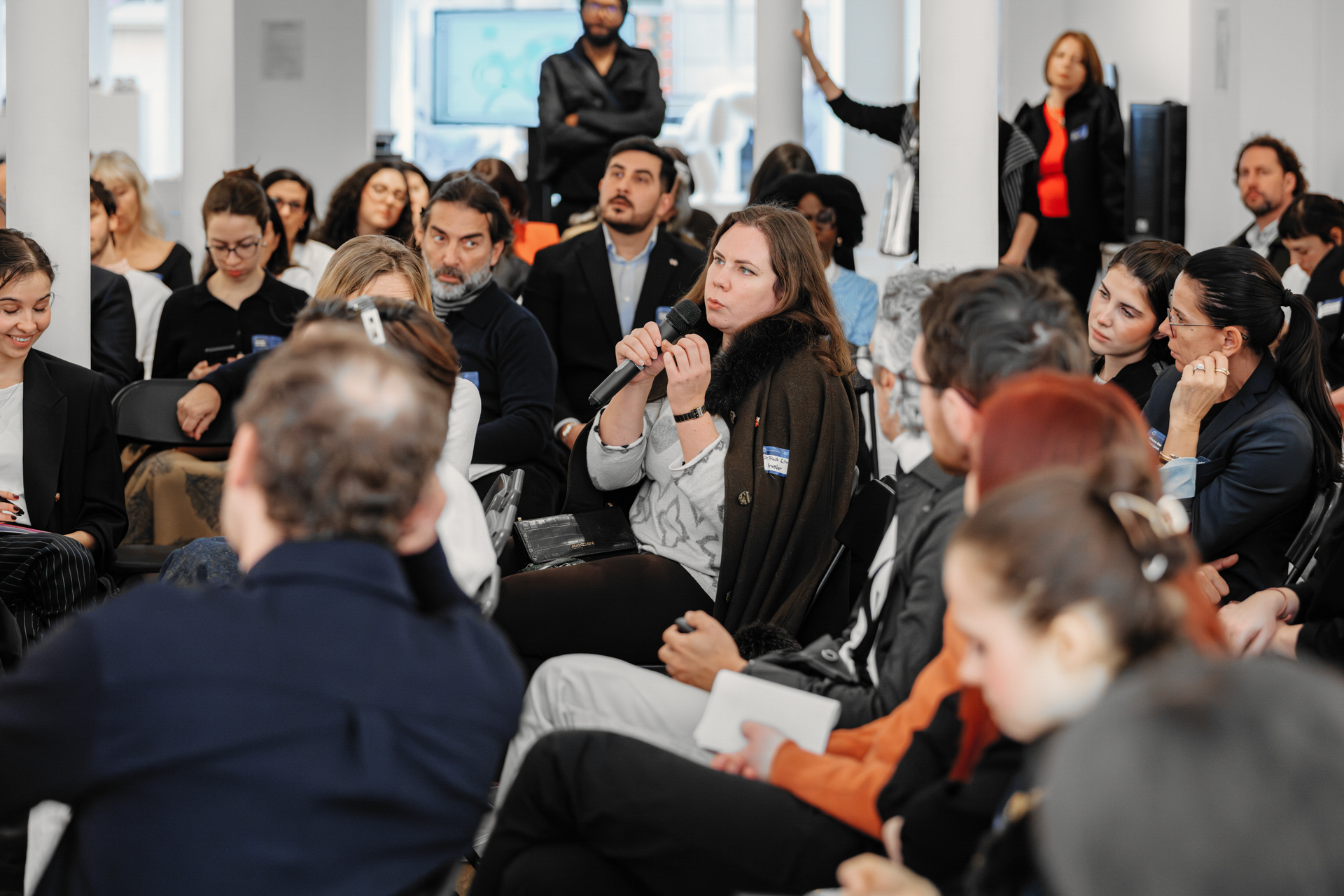
At national level, new frameworks are also emerging. The Action Plan Circular Textiles, led by CLICKNL, brings together public and private stakeholders to provide direction for the circular transition in The Netherlands. "It's not a single organisation or entrepreneur that can resolve it - we need to come together for shared vision and action", said Claire Teurlings.
Yet a sustainable future in fashion isn't only about environmental sustainability - it also demands financial sustainability. Helen Lax from London College of Fashion (UAL) and Angela L. Pastorino from Miron&Co addressed how we build the financial infrastructure circular fashion needs. Angela made the case for robust business models as the foundation. Innovation, both agreed, is what makes a brand investable.
However, it's not only brands that need to adapt. Unlike high-return tech ventures, sustainable fashion operates on a different curve - and risk assessment needs to be reviewed to reflect that, incorporating longer-term horizons and sustainability criteria into how brands are evaluated. "We need to move towards patient capital", said Helen.
Towards a shift in fashion and a collaborative future
Through a diversity of materials, business models and expertise, we reached common ground: designing for the future means working together, across disciplines, borders and value chains.
The event marked not an ending but a transition. The next stage - the NEB Fashion Shift - is already underway, bringing more knowledge, deeper collaboration and new pathways to financing innovation across the fashion value chain.
Alongside the programme, our Regional Hub North-West is actively building the ecosystem for circular fashion innovation - creating the conditions for diverse perspectives to meet and cross-border collaborations to grow across Ireland, Belgium, Northern France, the Netherlands, Luxembourg and the United Kingdom.
There is more to come. More to build, more to question, more to change. And the door is open.
Stay connected - sign up to our newsletter and join our Digital Hub for the latest updates. To contact programme leads Miriam Kathrein (Regional Hub South-East Alps & Transformation team) and Audrey Alamy (Transformation team), please use this form.
For broader partnership support on fashion & textiles, reach out to Gabriela De Vries, Business Developer at our Regional Hub North-West.